
Kilimanjaro Safaris at Disney’s Animal Kingdom (An Attraction Guide)
“Come see nature in its wildlife on the Kilimanjaro Safaris at Disney’s Animal Kingdom.” That sounds like a quote you might find in the Harambe area of the park. Unfortunately, most of us will probably never get to take a “real-life” safari. Kilimanjaro Safaris will probably be the closest we’ll ever get to enjoying such an experience.
Disney Imagineers took an exotic real-life experience, scaled it down, and made it available to guests of all ages. Years later, the safari remains one of Animal Kingdom’s busiest attractions. Below, we’ll cover what to expect and the best times to ride. We visit this park often just to ride the safari.
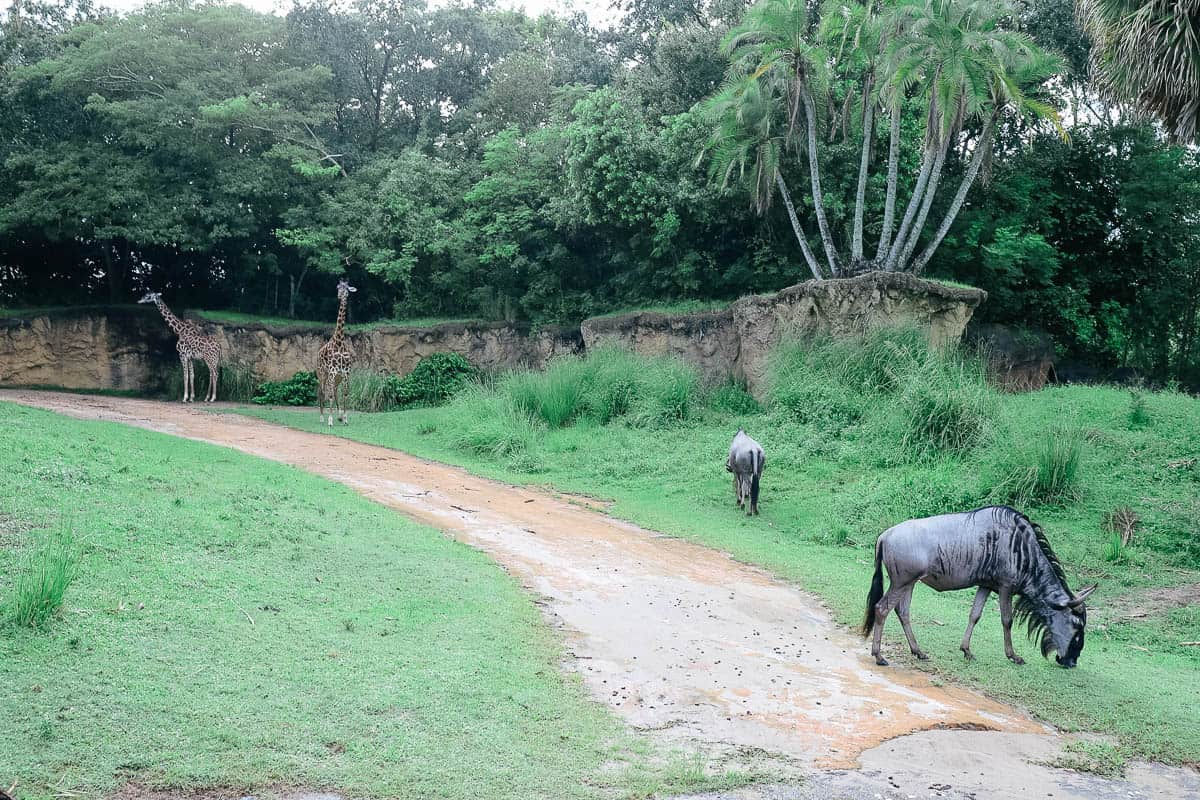
Here are a few quick reference details for the safari.
| Kilimanjaro Safaris | Disney’s Animal Kingdom |
Location: | Africa |
Height Requirement: | None |
Lightning Lane: | Yes, with Multi Pass |
Early Theme Park Entry: | No |
Extended Evening Hours: | No |
Ride Type: | Safari Truck / Open-Air Vehicle |
Seats Per Vehicle: | 4-5 per row |
Rider Switch: | None |
Good For: | Everyone |
Scare Factor: | None |
Must-Do List: | High Priority |
Perfect For: | Animal Lovers |
Other: | This attraction has no single-rider line. |
Special Mention: | Try to do it at least twice! No two safaris are alike. |
Accessibility:
- Must transfer to a wheelchair. (A wheelchair-accessible vehicle is available.)
- Designated transfer and load areas are also available.
- Video Captioning
- Assistive Listening
- Handheld Captioning
- Service Animals Permitted with Caution
Disney Warns: For safety, you should be in good health and free from high blood pressure, heart, back, or neck problems, motion sickness, or other conditions that could be aggravated by this adventure. Expectant mothers should not ride.
Kilimanjaro Safaris Review
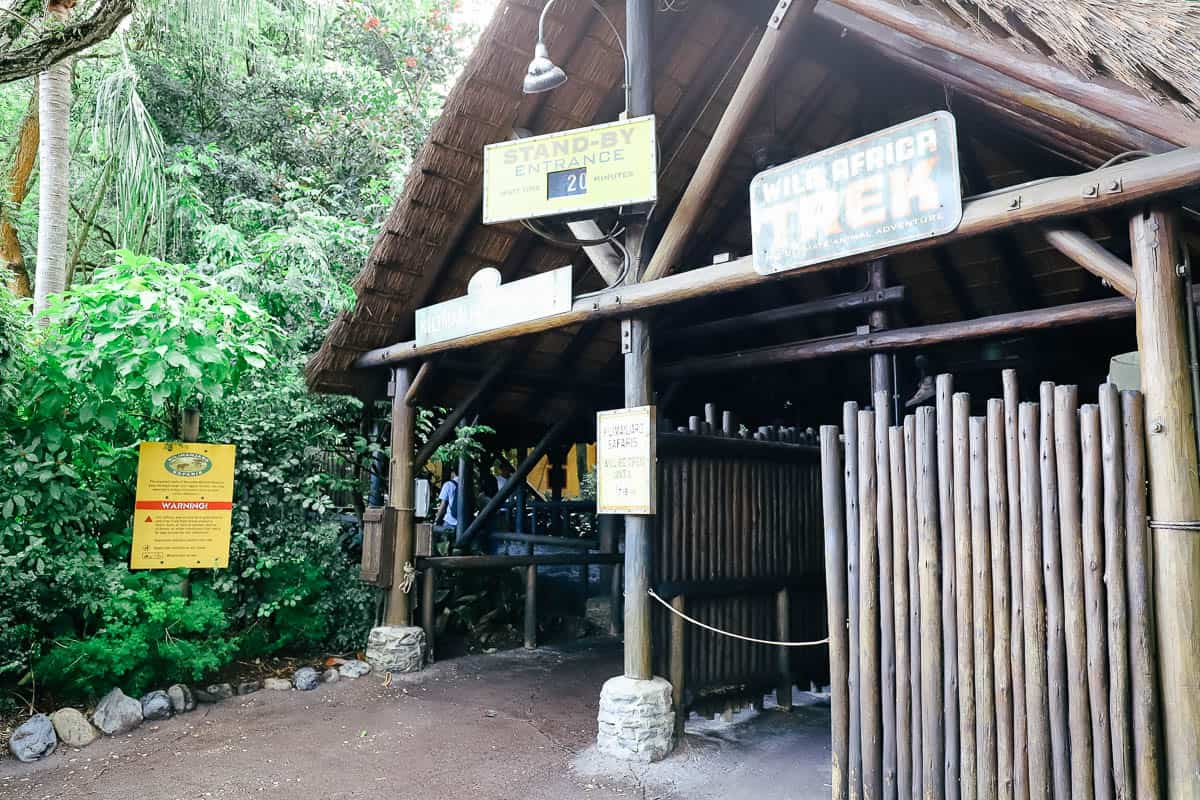
Kilimanjaro Safaris is located in the Africa section of Disney’s Animal Kingdom. It’s straight ahead after you cross the bridge from Discovery Island to Africa, toward the back of the park. A standby entrance is available at the attraction entrance. The queue is mostly shaded. Some areas are covered, but it is almost entirely outdoors.
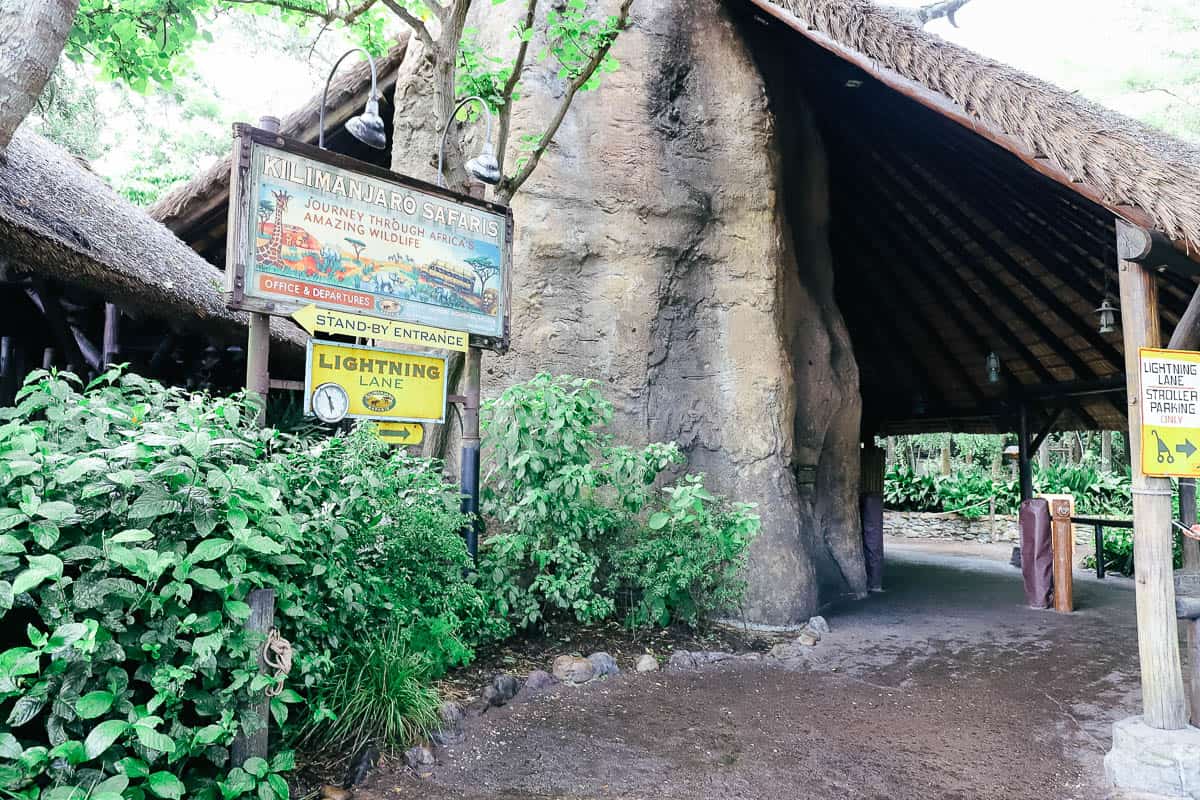
A separate Lightning Lane entrance sits to the right of the standby queue.
The original queue had overhead televisions that told the story of Big Red and Little Red, elephants who were being hunted by vicious poachers. However, the entire poacher storyline was removed some time ago. Today, the ride focuses on conservation and educating guests.
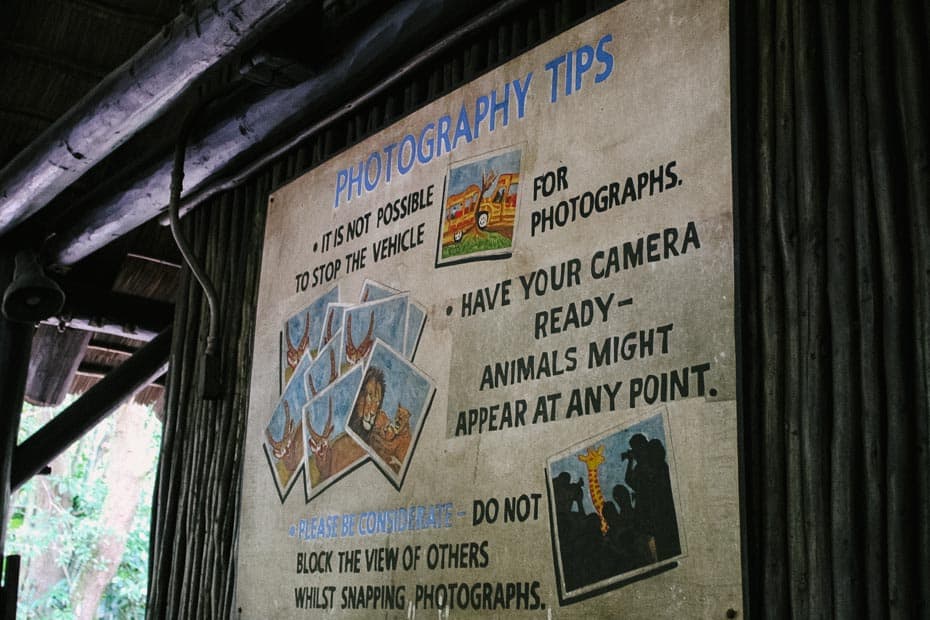
A few photography tips are posted in the queue:
- Drivers can’t stop the vehicle for photos.
- Have your camera ready. Animals might appear at any moment.
- Please be considerate and don’t block others’ view while snapping photos.
Your driver will likely share a few other tips:
- Set your camera to a sports mode setting (or comparable) for the best results.
- If you have a zoom lens, consider using it for long-range shots.
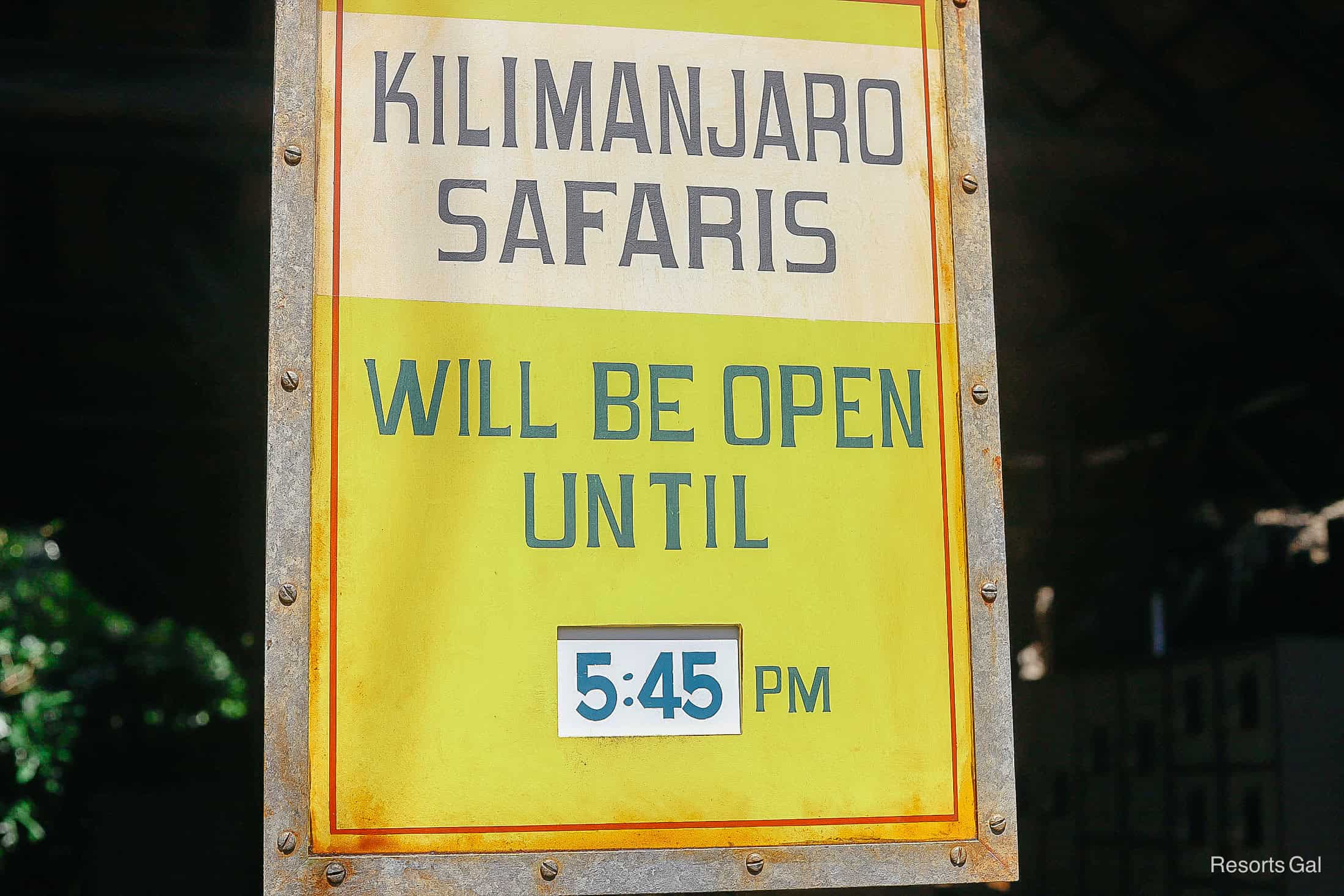
Kilimanjaro Safaris usually closes earlier than the rest of the park. We like to ride the safari a couple of times on our visits. One of the best times to ride is the last hour of the day. So make note of what time the safari closes the first time you ride. We rarely experience a wait when we return later in the day. (Of course, if you’re visiting during a busy time of year, like Christmas or Easter, that may not be the case.)
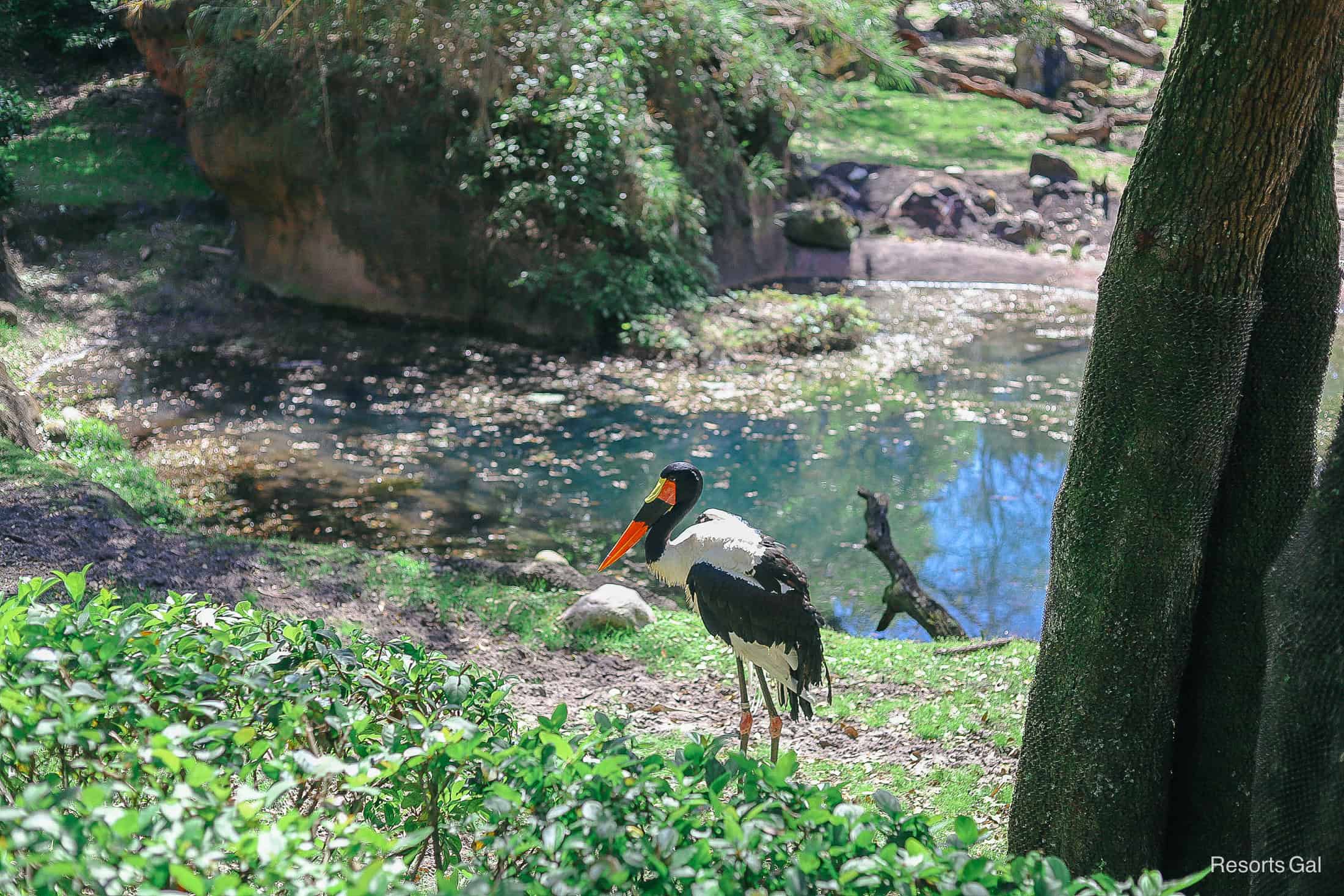
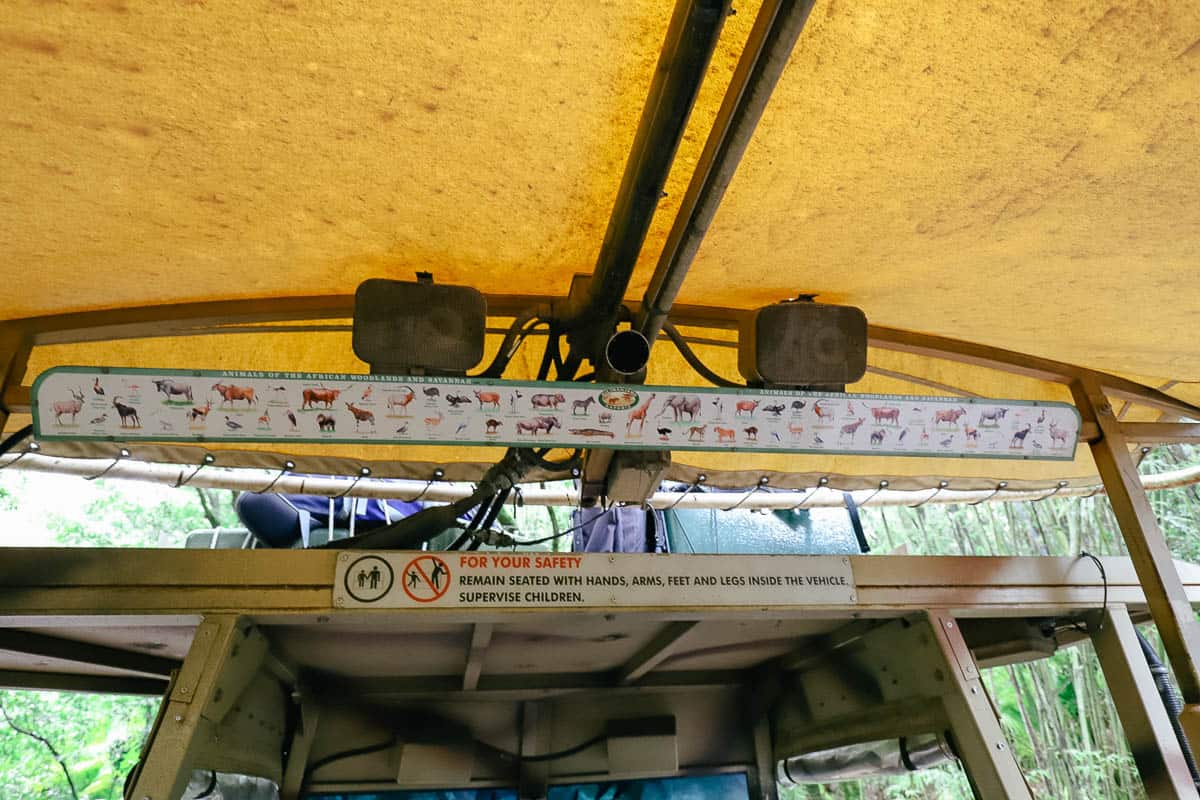
At least 34 animal species call the Harambe Wildlife Reserve home. The reserve covers over 110 acres of open plains, shady forest, and rocky wetlands. A sign above the rows of safari vehicles lists most of the animals you might see.
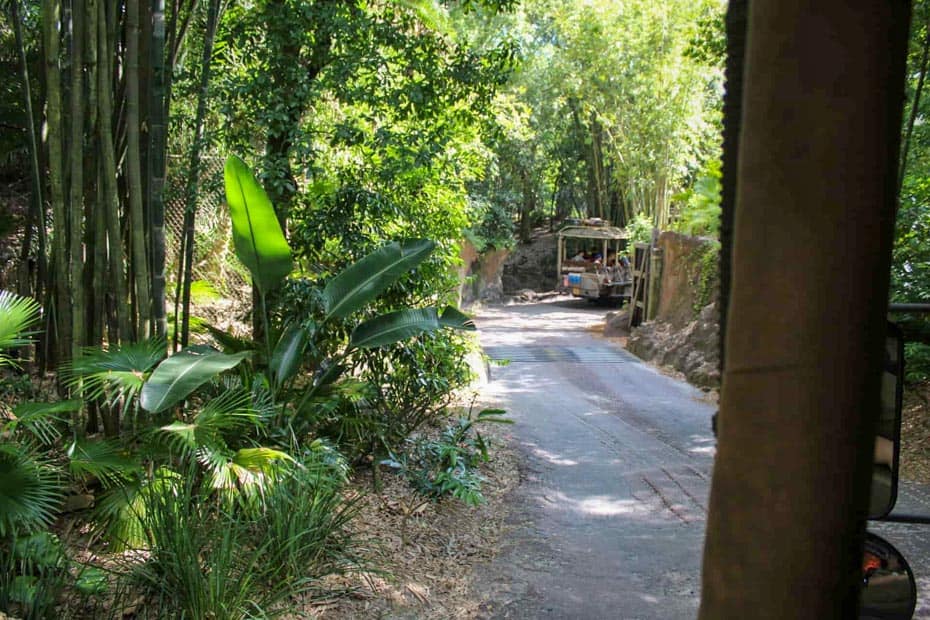
Below, we see a safari vehicle ahead as it enters the reserve.
After entering the reserve, you’ll usually see an okapi first. An Okapi is a beautiful animal that resembles a zebra at first glance.
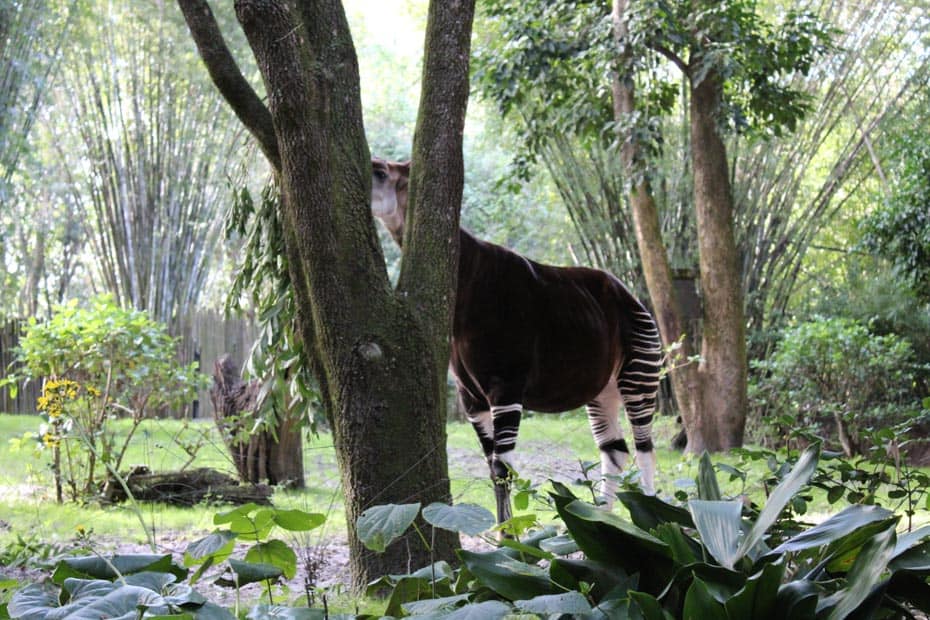
However, the Okapi is part of the giraffe family. For a closer look at an Okapi, visit the Gorilla Falls Exploration Trail after your safari or at any point during the day. The Gorilla Falls entrance is immediately to the right when you exit. It’s a gorgeous trail with animal encounters, unique scenery, an aviary, and gorillas.
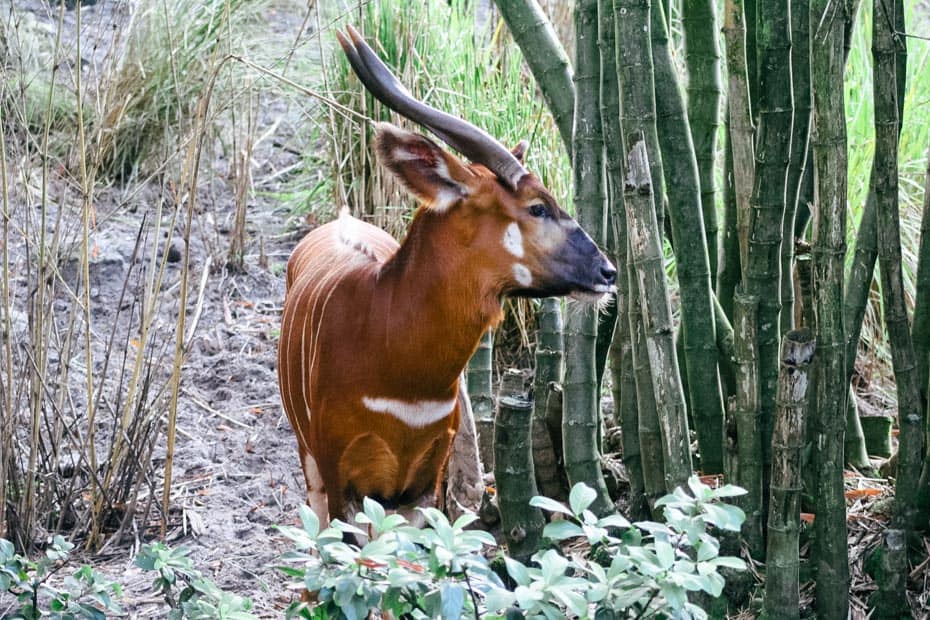
We also often see gazelles, impalas, and bongos in this area. Here is a bongo that was close to our vehicle.
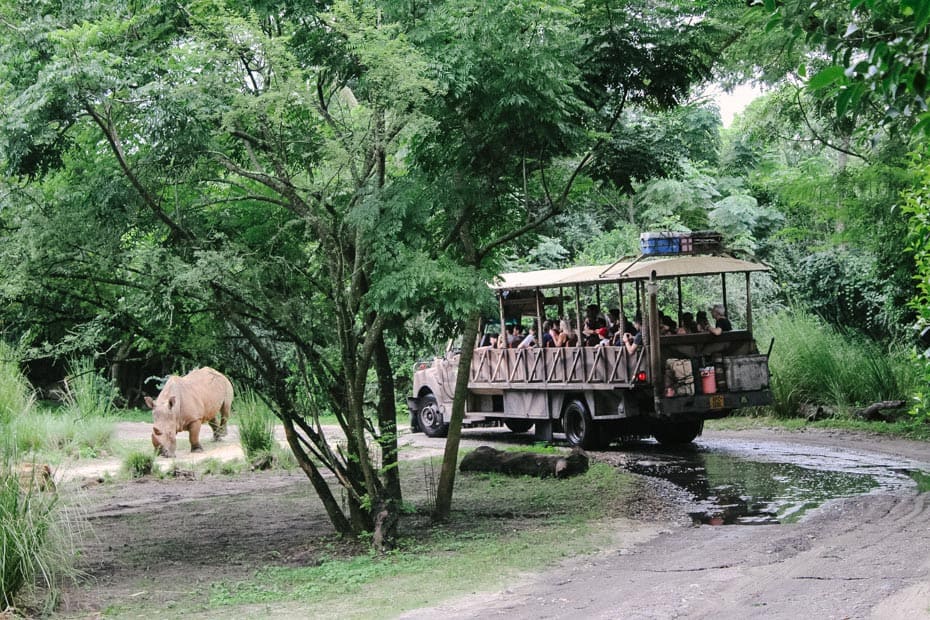
Black Rhinos are usually out toward the beginning of the attraction.
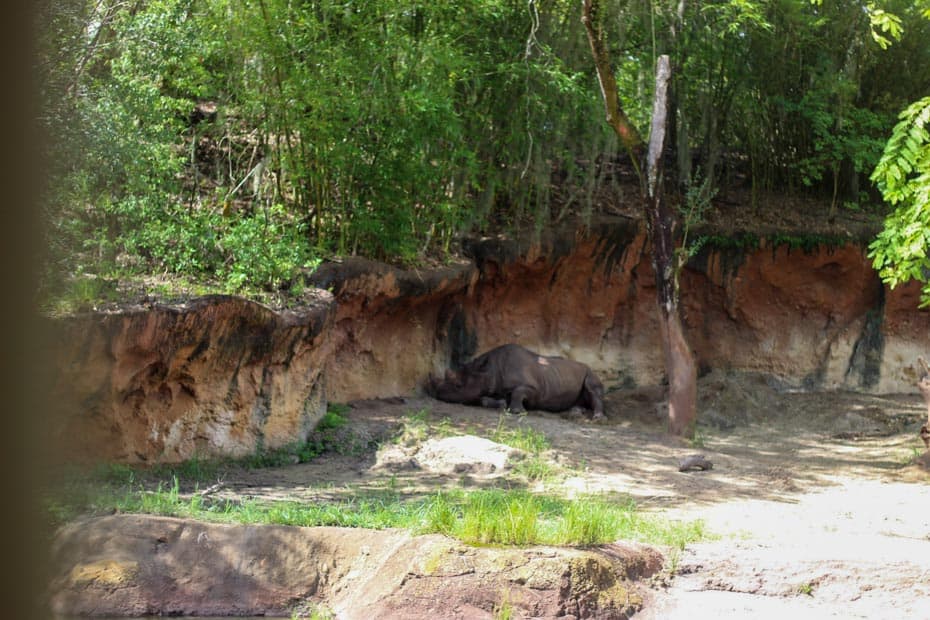
Black Rhinos are considered critically endangered. Unfortunately, people hunt and poach them for their horns. The most distinguishable difference between black and white rhinos is their hooked lips.
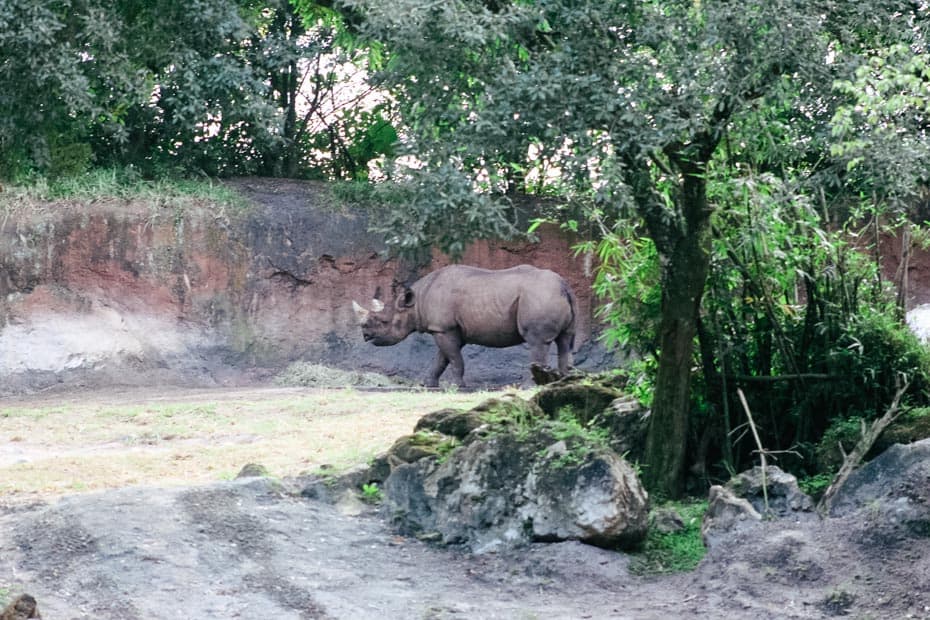
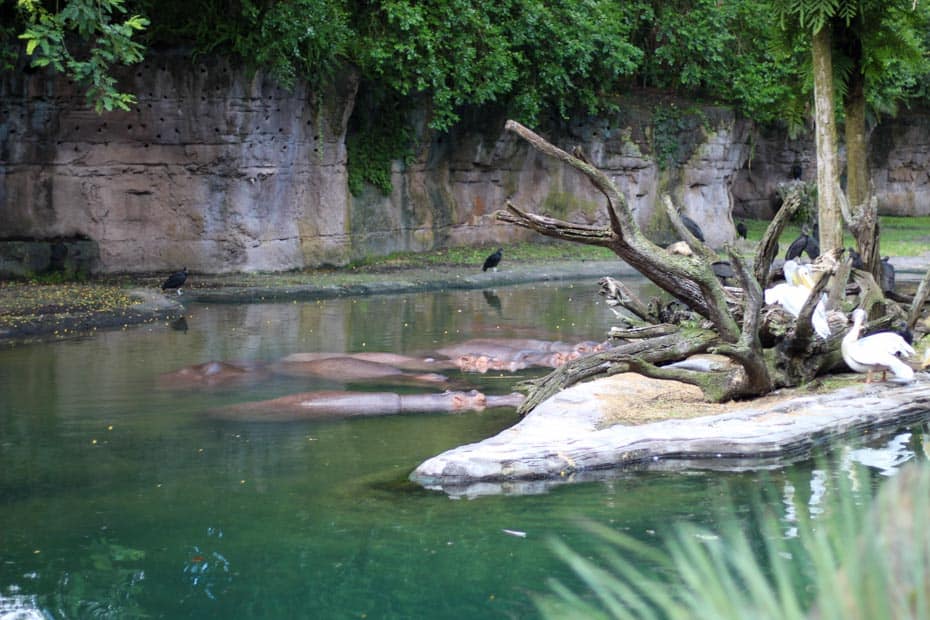
After passing the rhinoceros area, you’ll enter the waters of the Harambe Wildlife Reserve. Hopefully, you’ll see a bloat, which is a group of hippos.
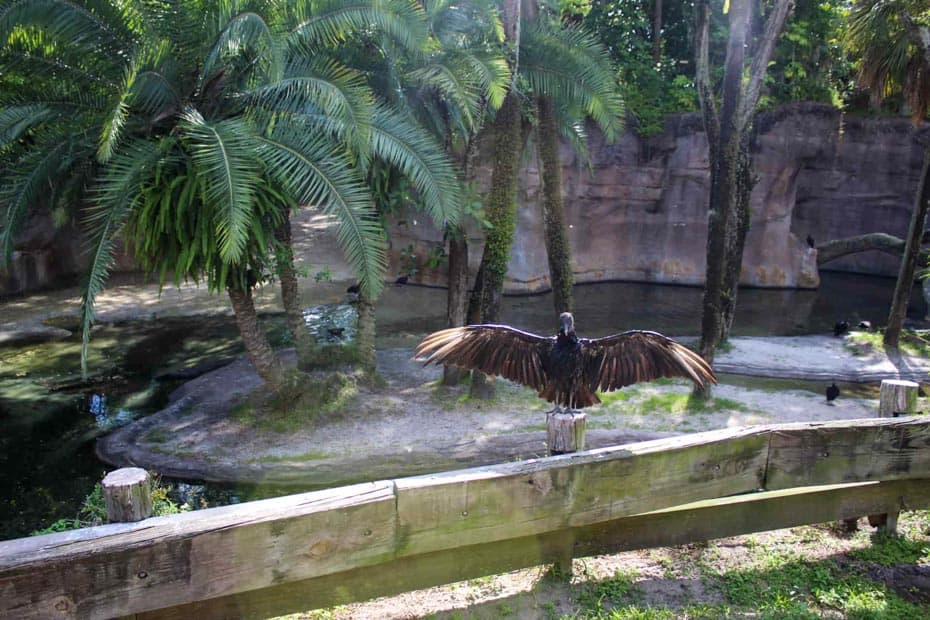
You might also see a few vultures here. If you see them like this, with their wings spread out, they are probably sunbathing, which helps keep their feathers healthy.
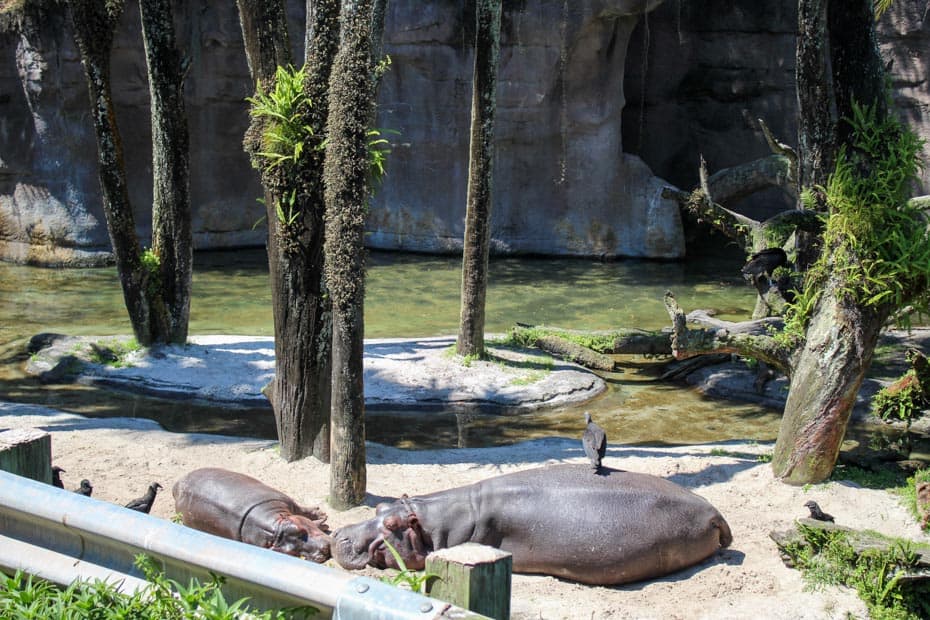
However, don’t get too distracted with the vultures. You might also see a hippopotamus sunbathing.
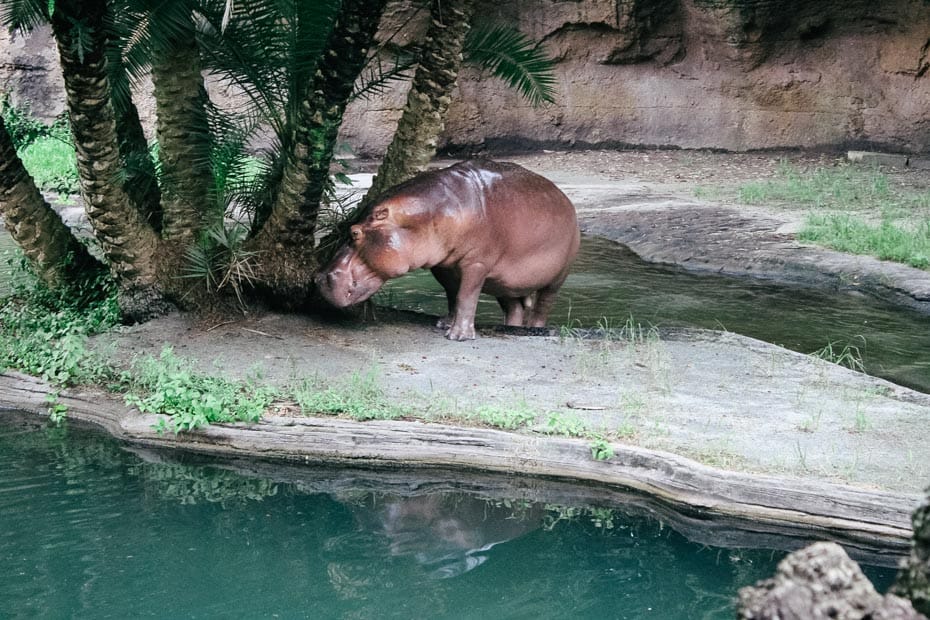
Occasionally, baby animals are born at Disney’s Animal Kingdom. Over the years, I’ve been fortunate to see several. Below is a picture of a baby hippo named Augustus. He was born a few years ago and, when he was old enough, moved to another zoo.
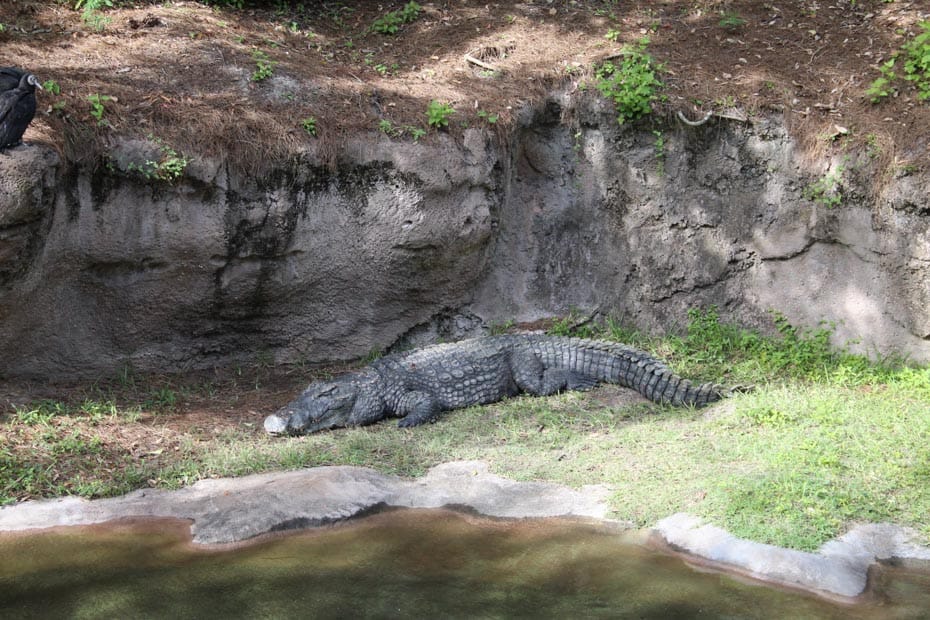
Just past the hippo area, there’s an area on the left where you can look down and see Nile crocodiles. They are pretty significant, and it is rare to see them moving.
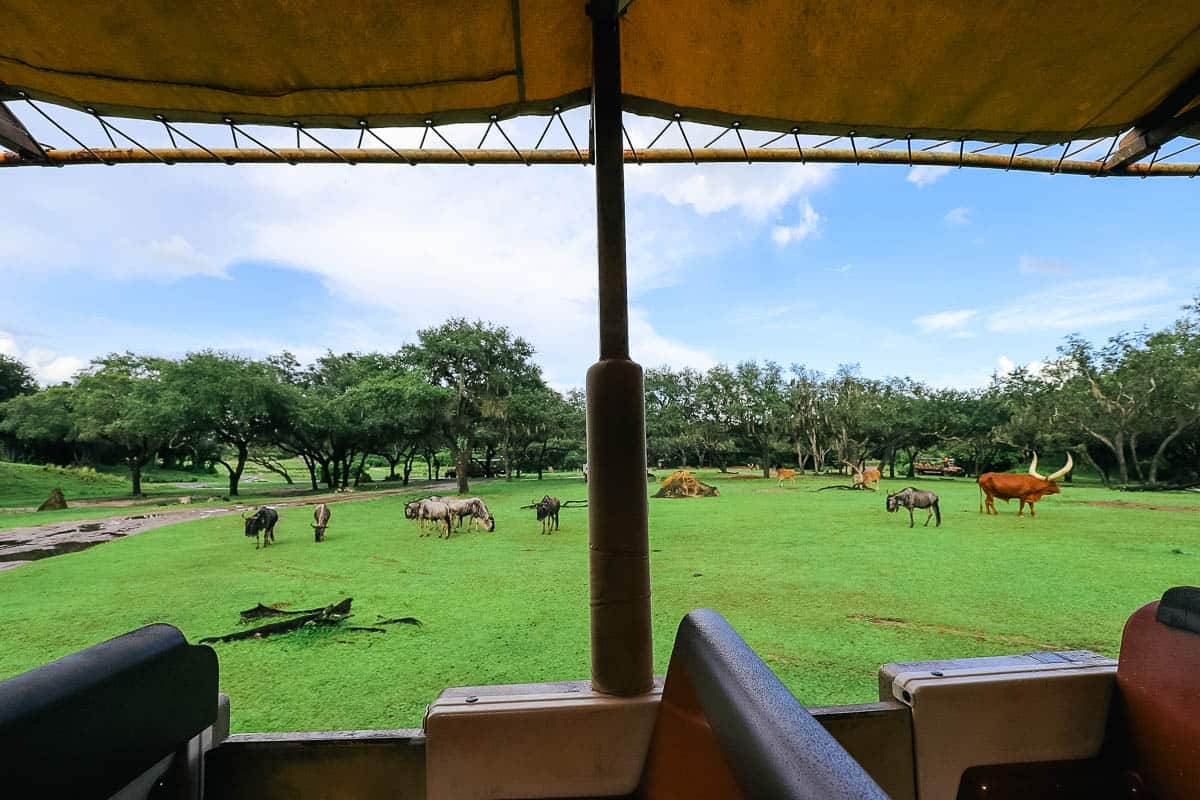
Next, you’ll pass a Baobab tree, and the driver will give you a spiel about how it grows upside down. As you do, you’ll come out into a large, open savanna. Here, you will find a variety of animals grazing in a replica of the Sub-Saharan East African landscape. The views are often stunning.
Below is the Springbok, my favorite animal on the safari! These little guys are adorable, but don’t let their genteel looks deceive you. They can reach speeds up to 55 miles per hour. Not only that, but they also do something called pronking.
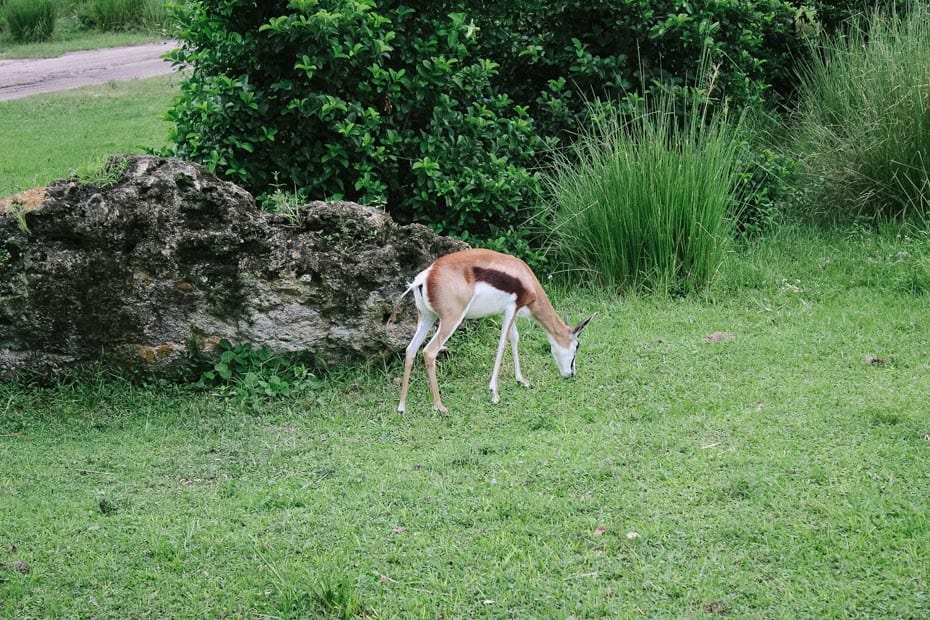
I’ve only seen them in action once on the safari, and it was amazing. Everyone, including our driver, was blown away.
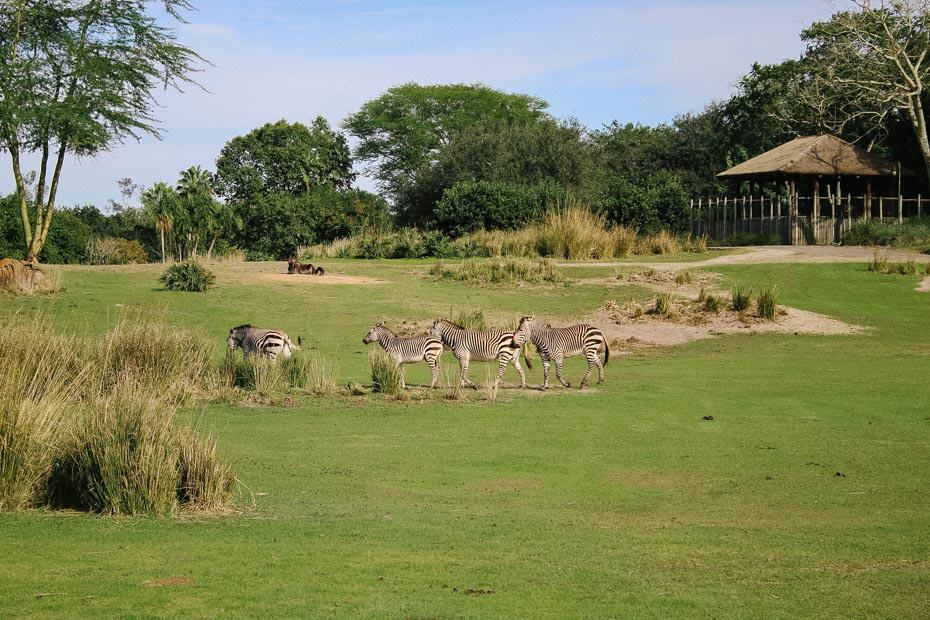
Zebras are another animal you might see on the African Savanna.
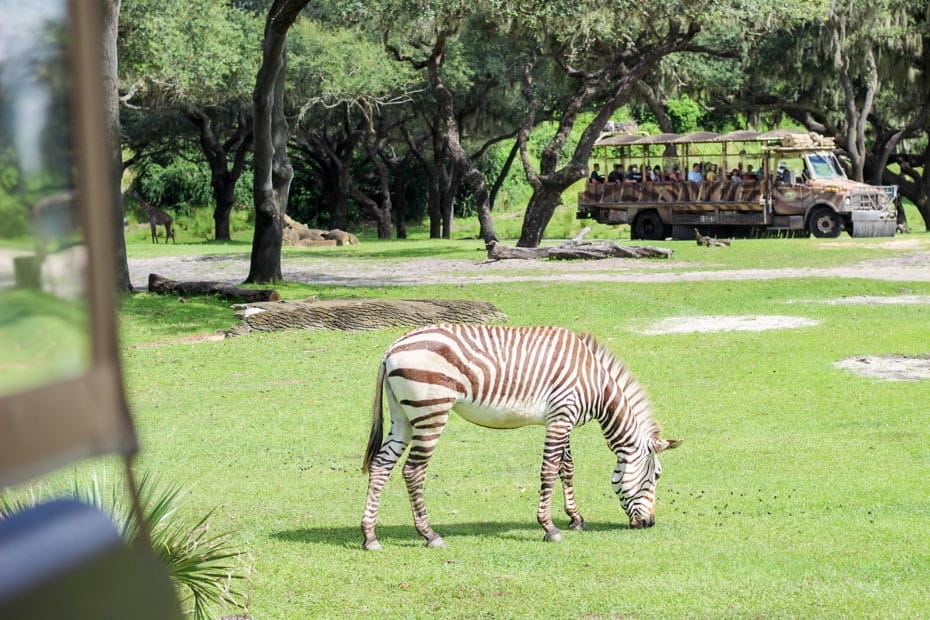
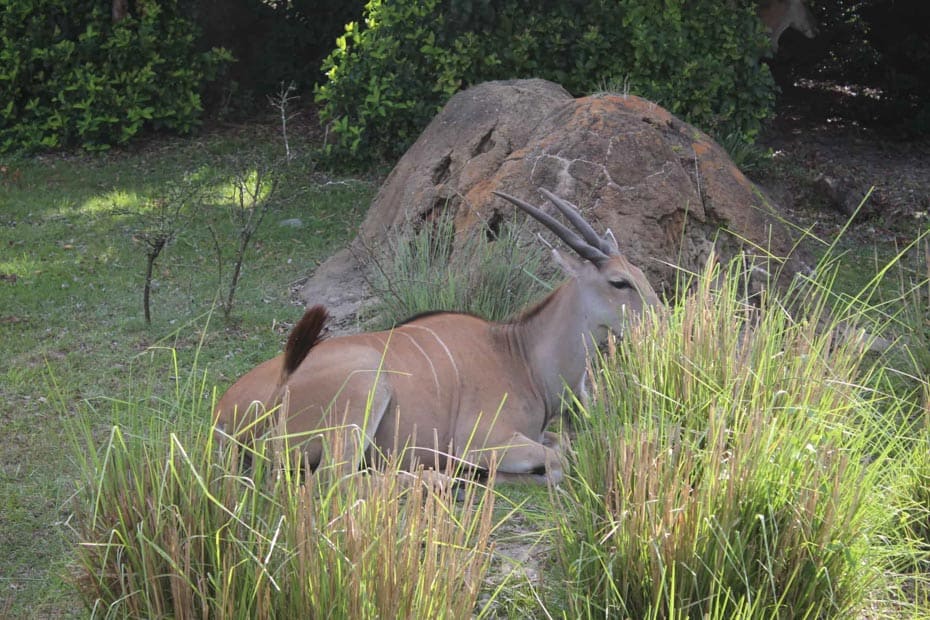
Make sure to look all around. Some animals are easy to see, while others hide in plain sight.
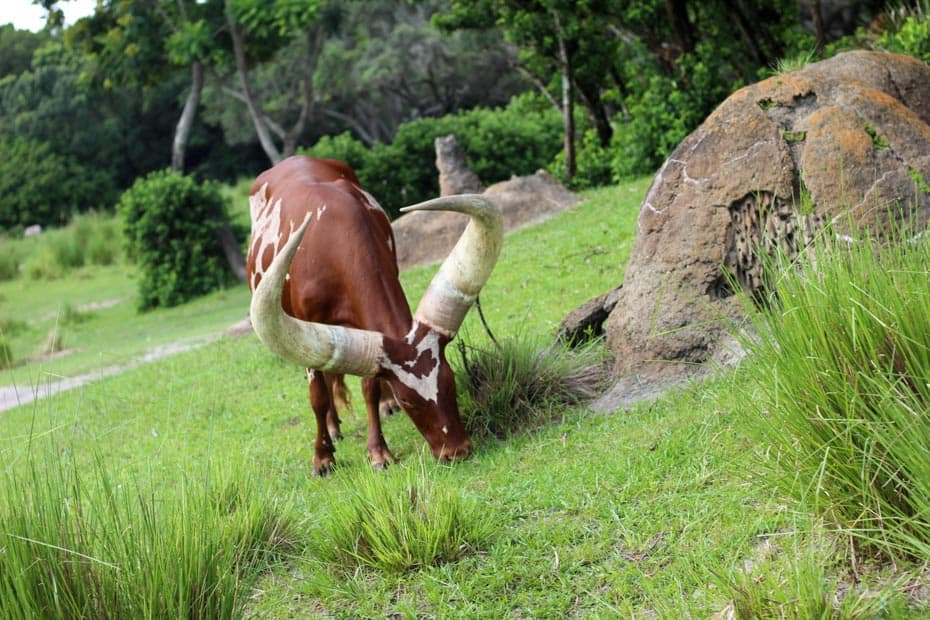
Check out the massive horns on these Ankole cattle. Fortunately, they aren’t as heavy as they look. According to the safari driver, they resemble honeycombs.
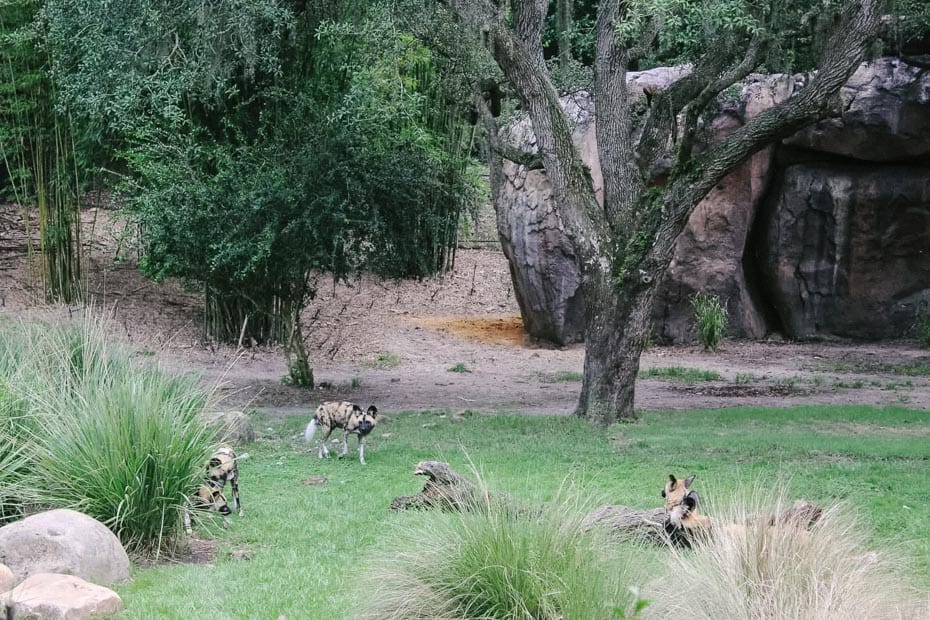
When you reach the savanna, one of the first things you’ll see is an enclosure on the left-hand side. This den is usually home to African Painted Dogs. They are usually napping in their den. In the past, we’ve also seen hyenas here.
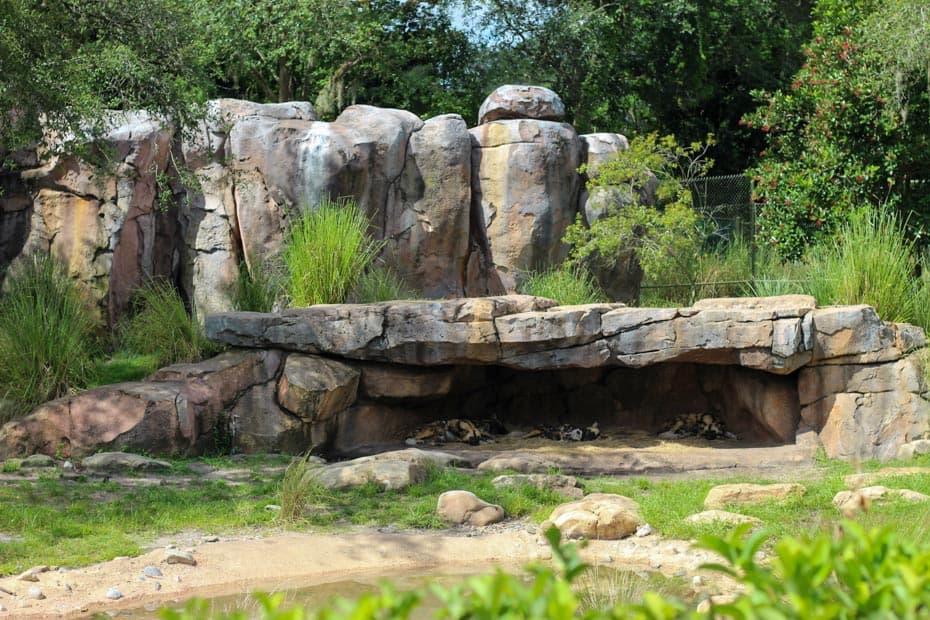
Occasionally, you might see a few awake. But from my experience, those times are few and far between.
As you curve around the savanna, you’ll see various animals coexisting.
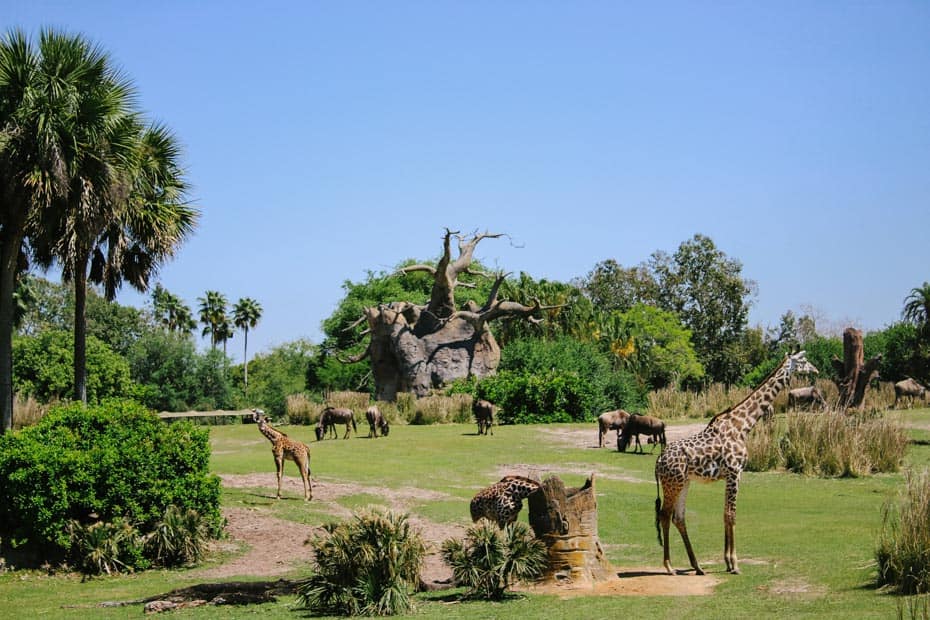
Lately, there have been quite a few zebras.
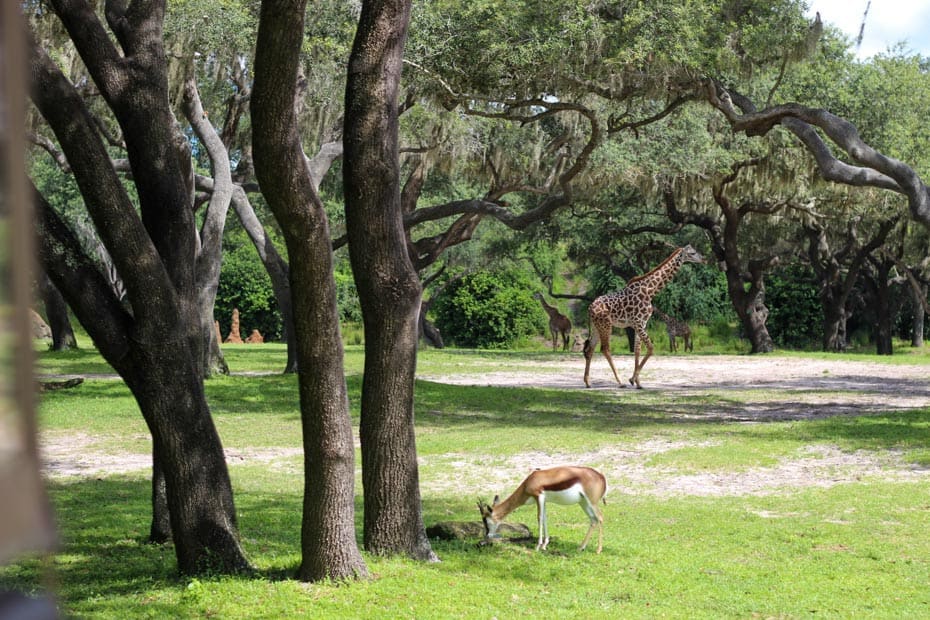
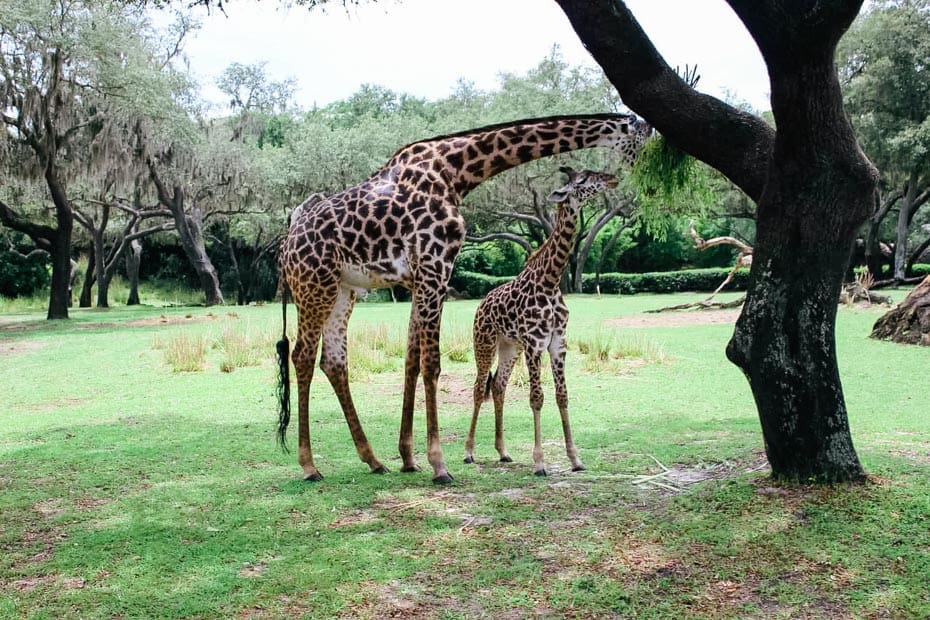
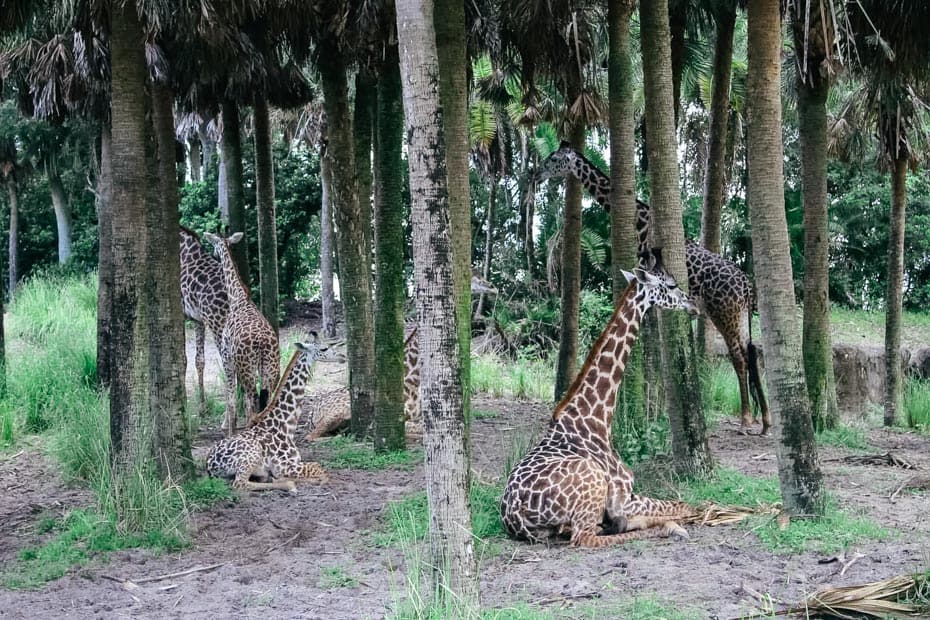
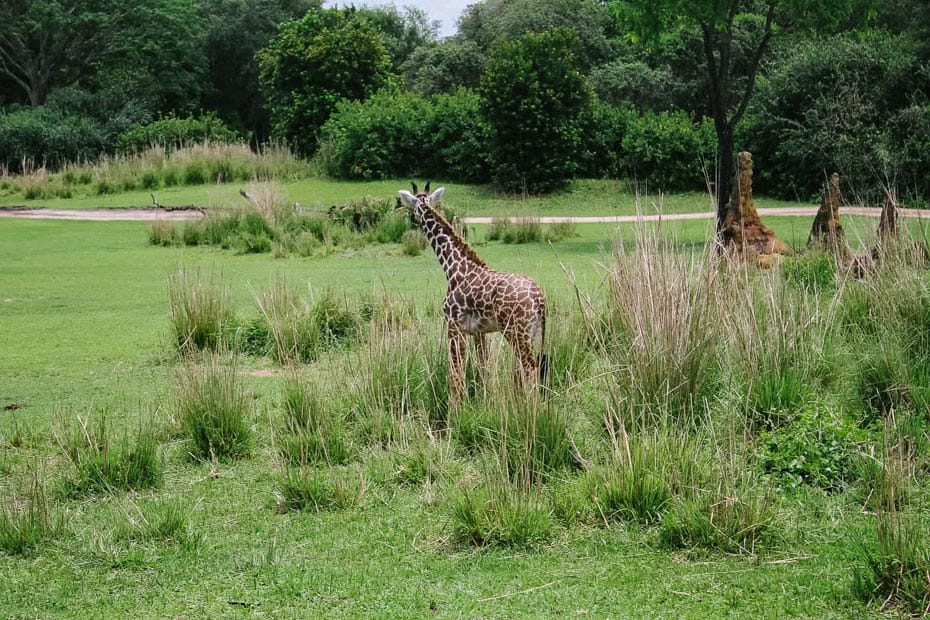
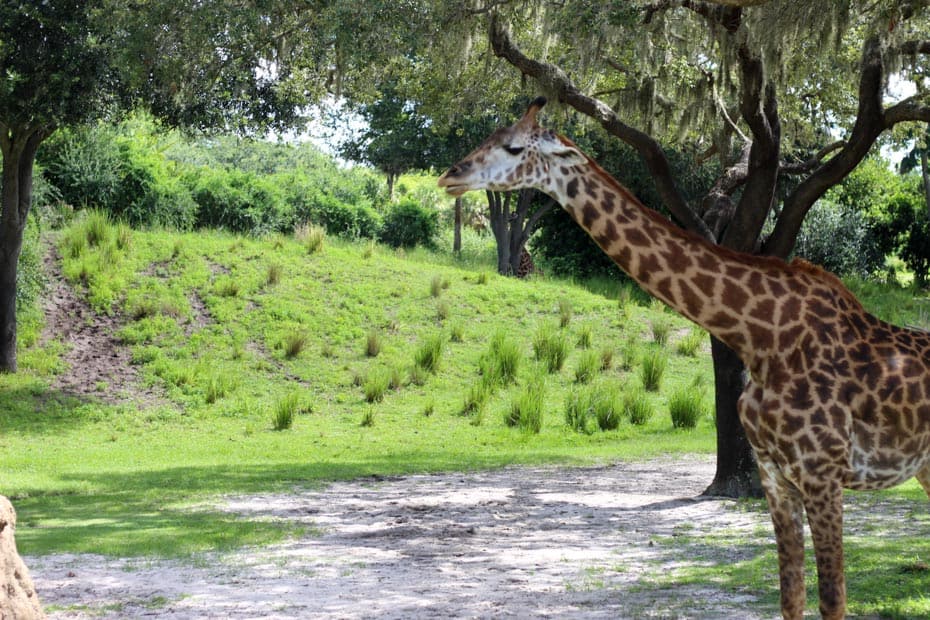
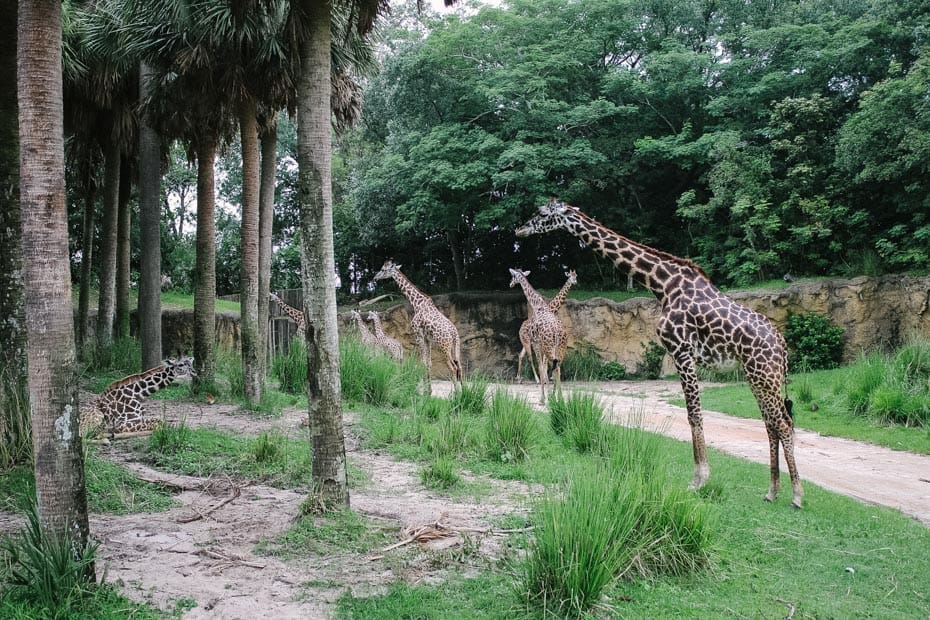
The giraffes are Masai giraffes. If you time things right, you might even see some babies. But really, it’s luck. Did you know they are up and walking within minutes?
To see Reticulated Giraffes, visit Disney’s Animal Kingdom Lodge. The resort’s savannas have both Masai and Reticulated Giraffes.
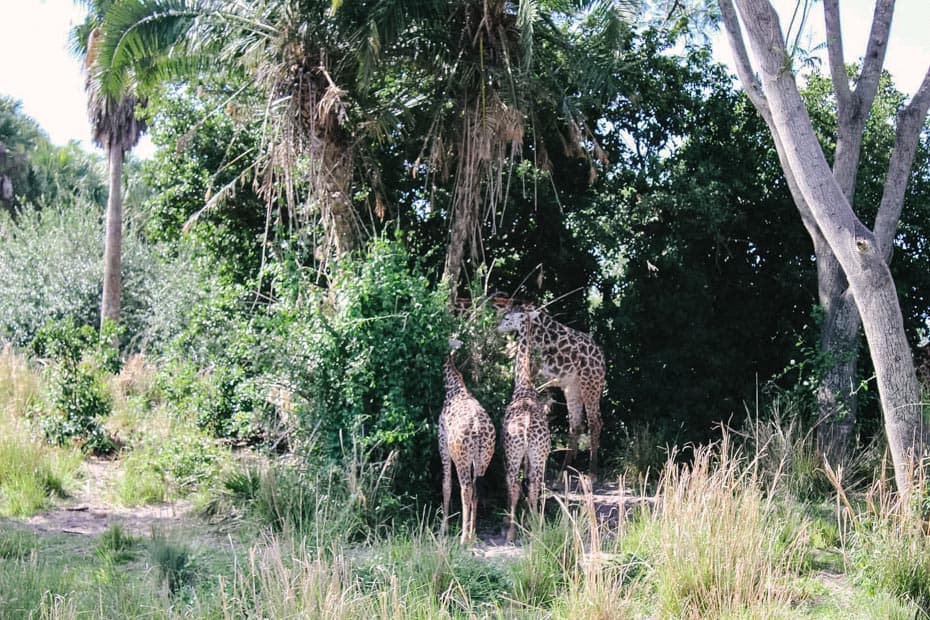
Giraffes are known for caring for one another. It is not uncommon to see them form a group called a tower.
Here is one of the babies looking out onto the savanna.
Sometimes, they walk right up to your vehicle.
If you don’t see any on the main portion of the savanna, don’t worry. They are often grouped in this area ahead on the left.
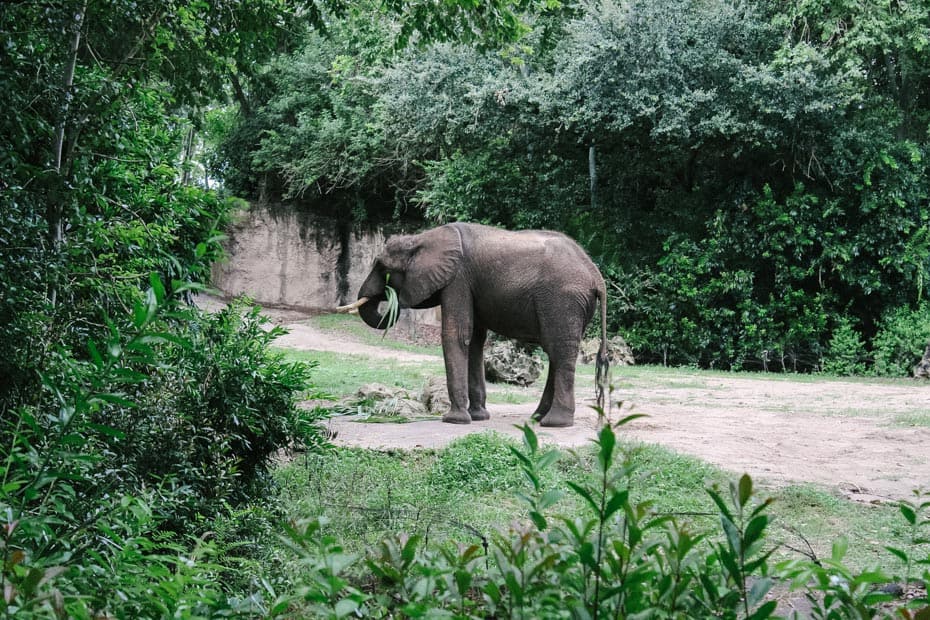
After passing the main giraffe area, you will likely see a lone male elephant.
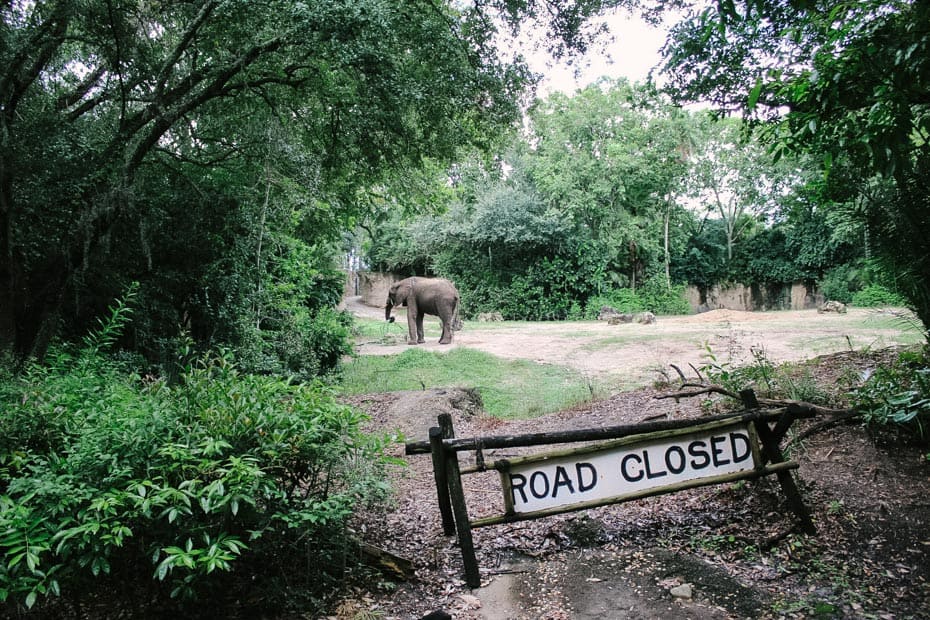
Male elephants hang out alone, separately from the rest of the herd.
Across the way, you might catch a glimpse of the Mandrills at play. They are on the left-hand side and can be challenging to spot. For example, there are two in the picture below.
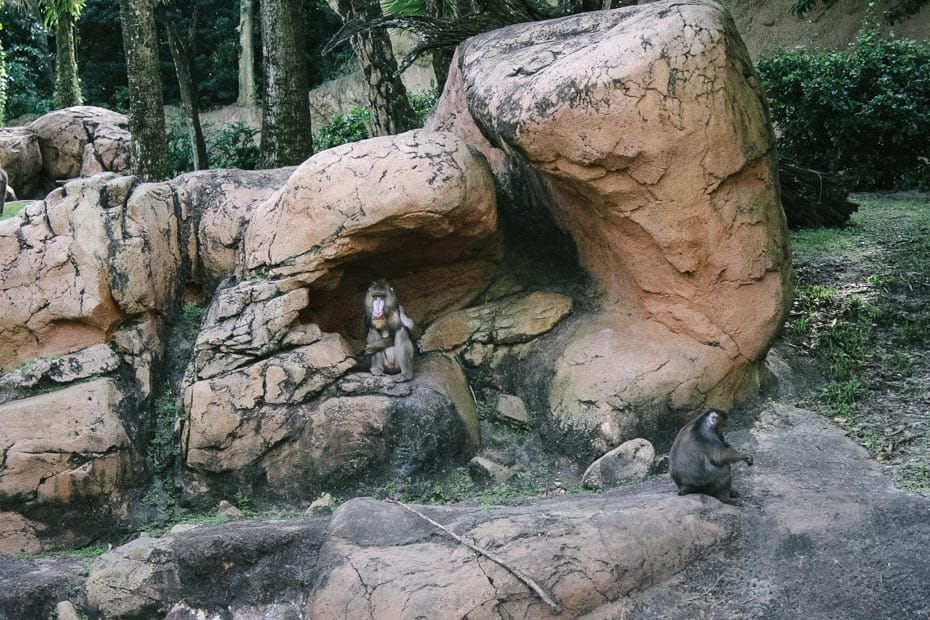
Unfortunately, the drivers rarely mention them on the safaris I’ve been on lately. Nobody puts the Mandrills in a corner. Up ahead, you’ll catch up with the rest of the elephant herd.
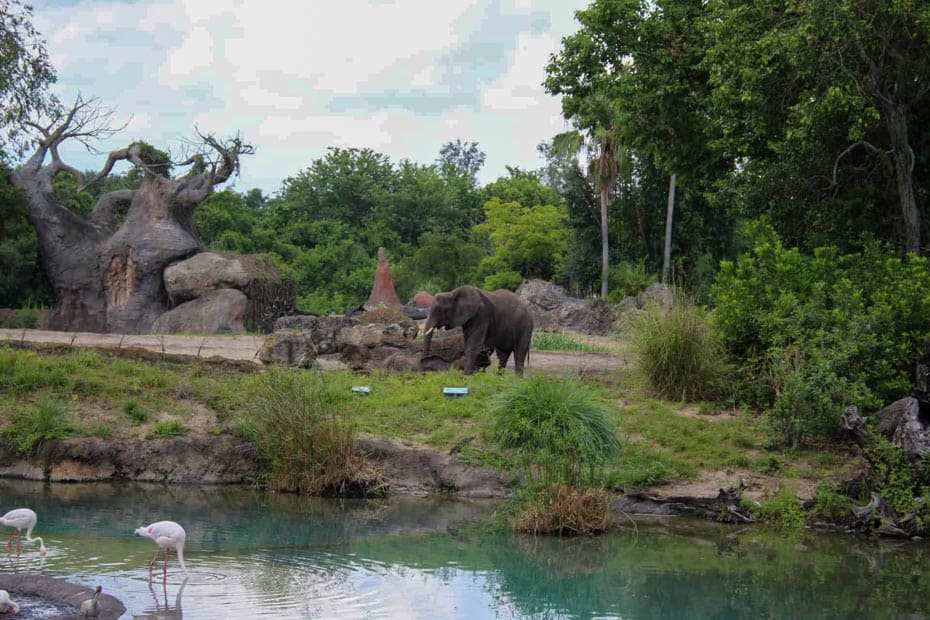
Usually, 4-5 elephants are around the water. Below, you can see Stella, once the youngest in the herd.
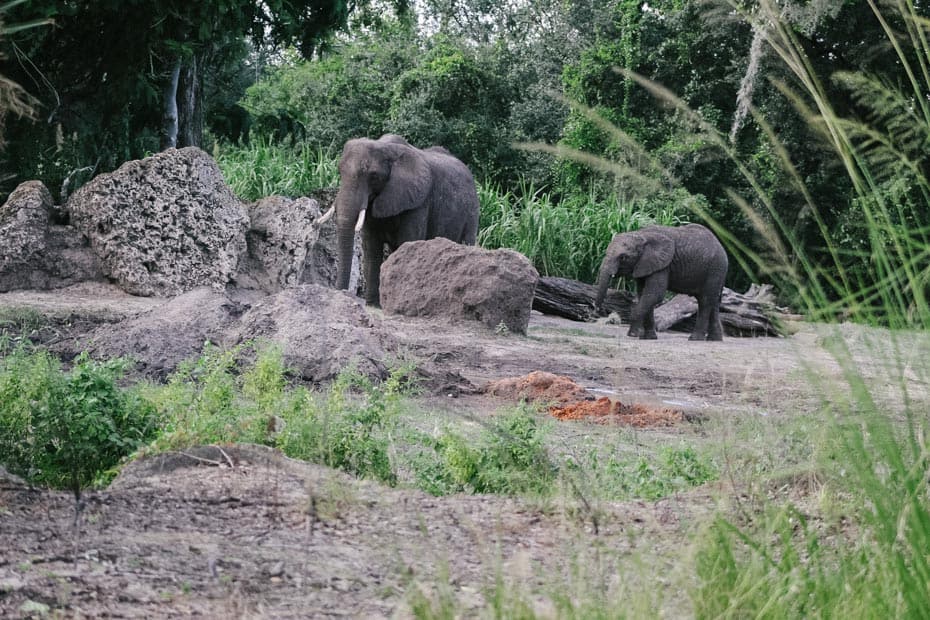
But now that award goes to Baby Cora, born in 2024.
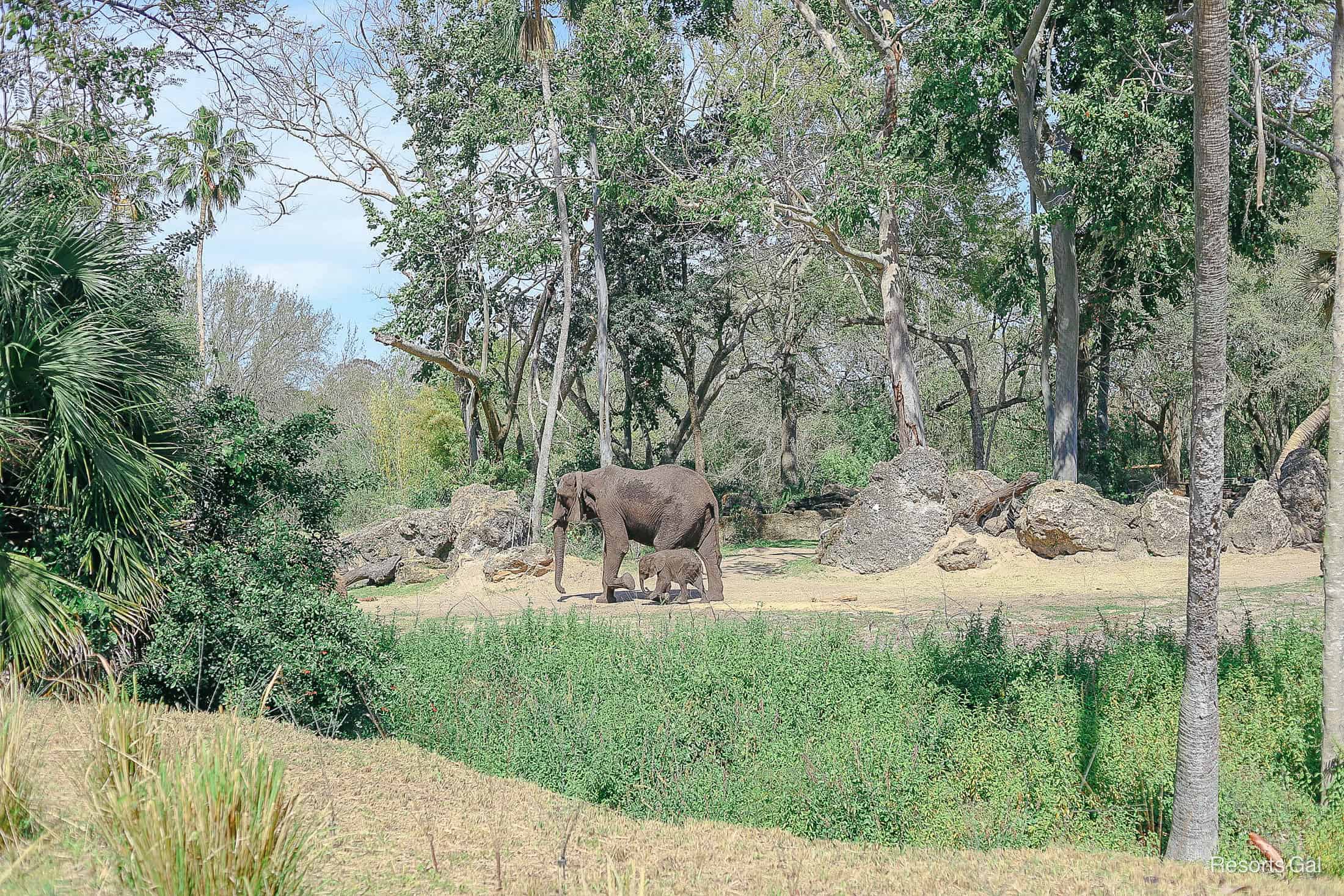
Visiting Disney’s Animal Kingdom so often has been a special blessing in my life. I know so many babies and have watched them grow up over the past few years.
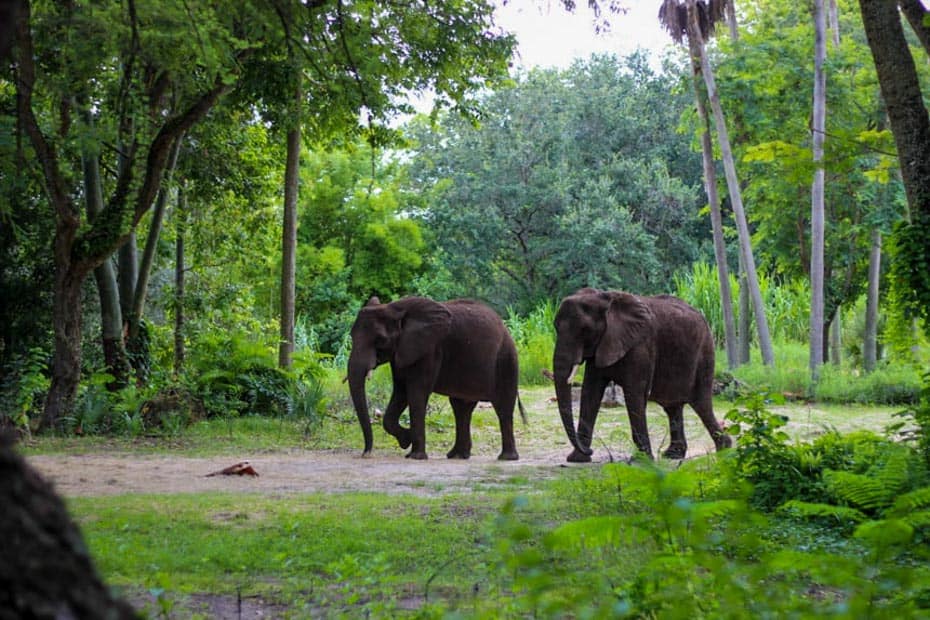
One thing that’s not always mentioned on the safari ride is that most of the animals have formal names. I get that it’s tough to keep them straight, but knowing a few of them and being able to recognize them on the safari can feel kind of surreal sometimes.
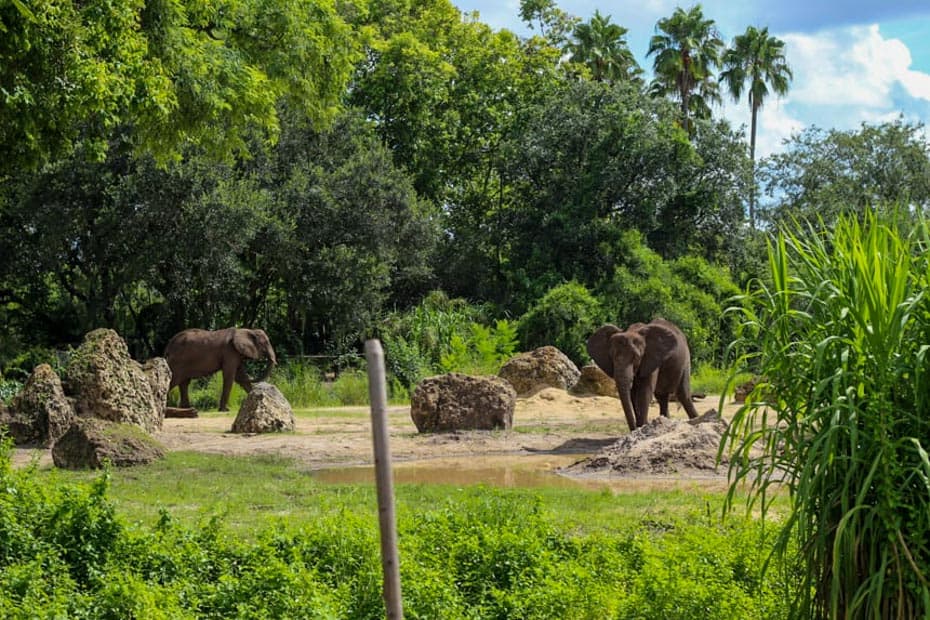
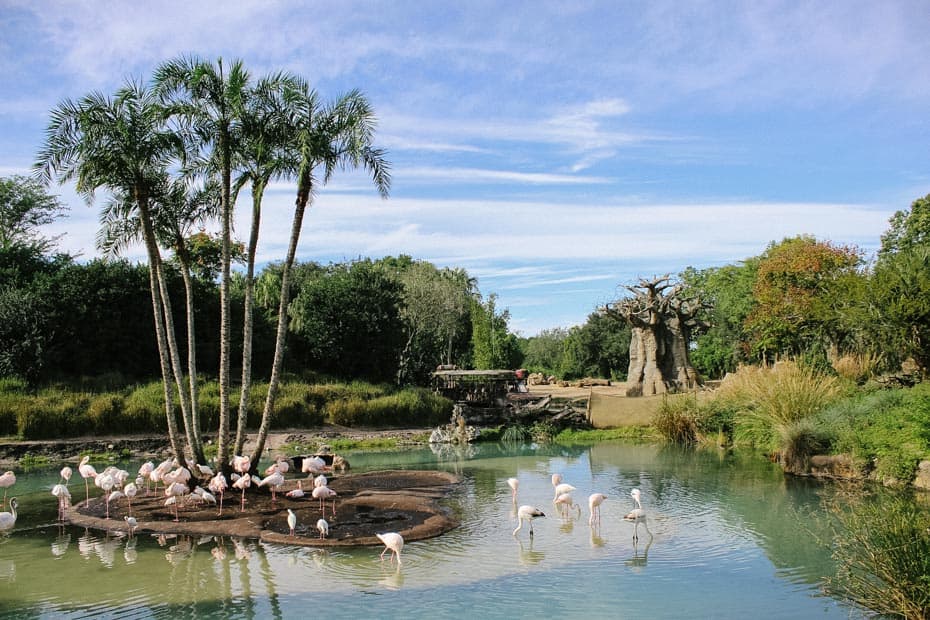
As you pass the elephants, you will see a watering hole for the flamingos. Look closely, and you might notice that the island is a hidden Mickey.
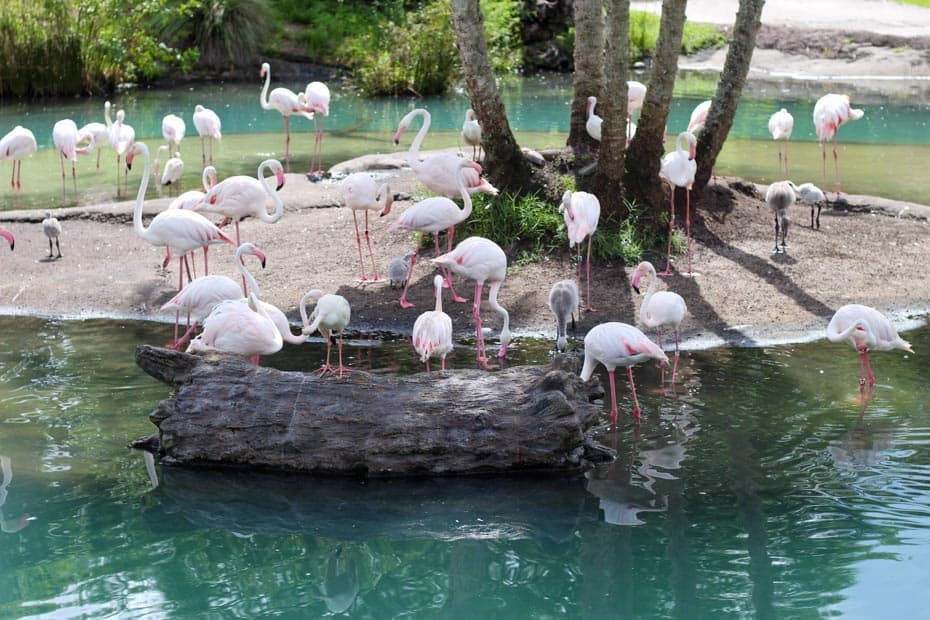
From time to time, you might see a few newborn flamingos at the watering hole. You can tell which ones they are because they are covered in grey feathers. These babies were less than a week old when I took these photos.
After passing the Mickey-shaped island, some rhinos are usually roaming nearby. They are often close to the safari vehicle.
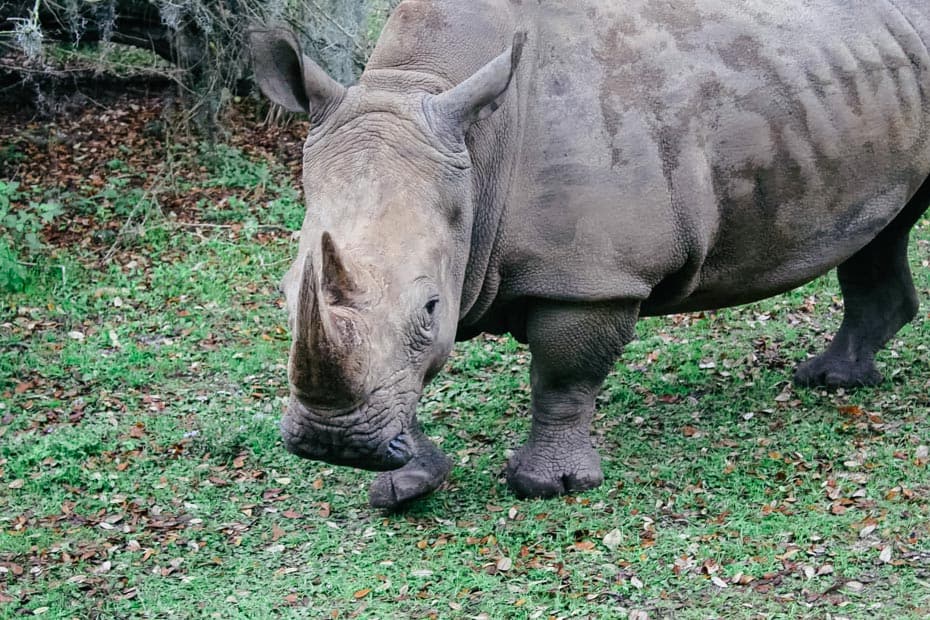
One day, a pair of them walked alongside our vehicle. They were so close that I could have reached out and touched them.
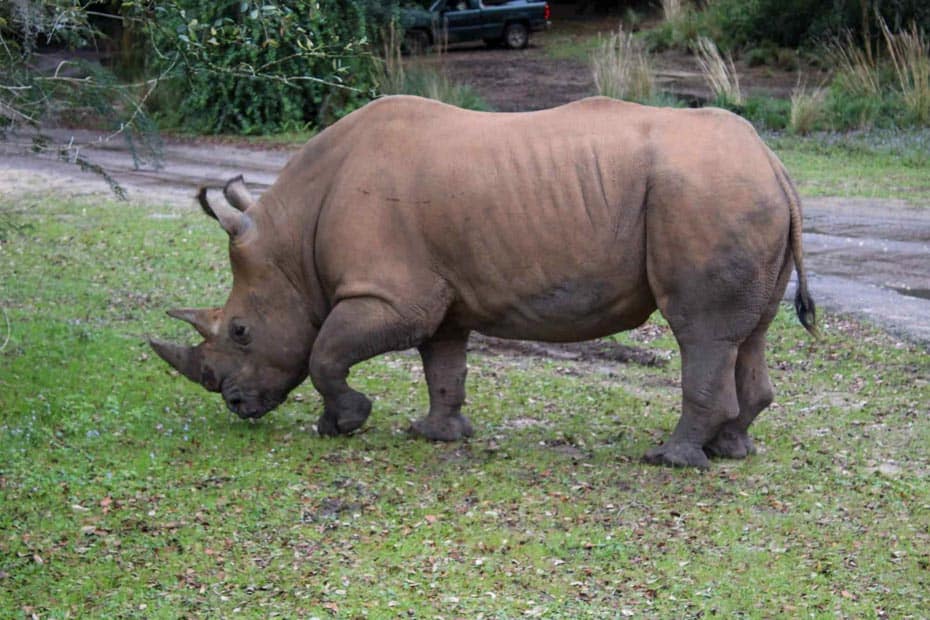
But of course, that would be very dangerous, and they are so large I couldn’t imagine!
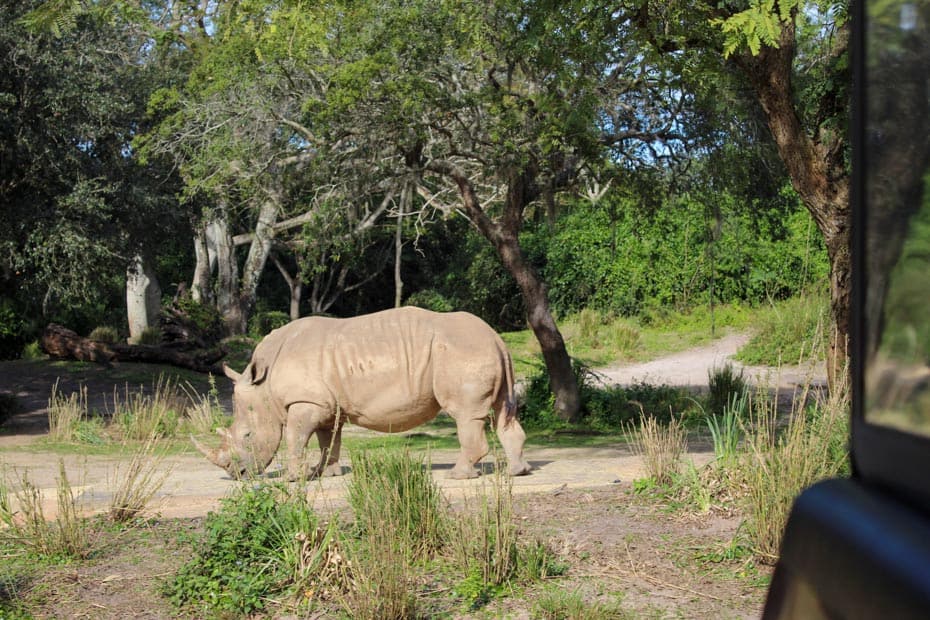
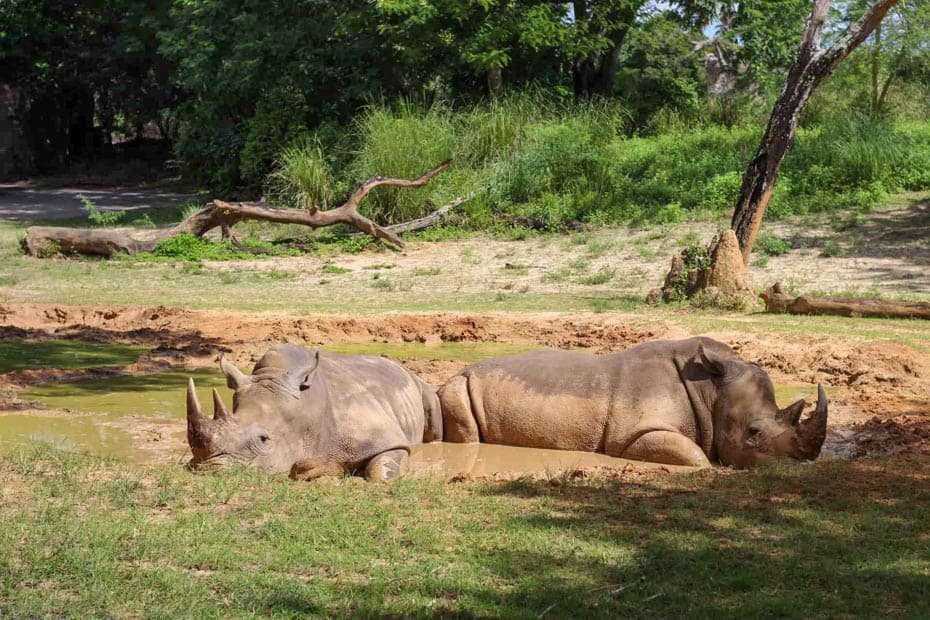
Sometimes, when it rains, you might see them wallowing in the mud. Seriously, who doesn’t enjoy a little spa time?
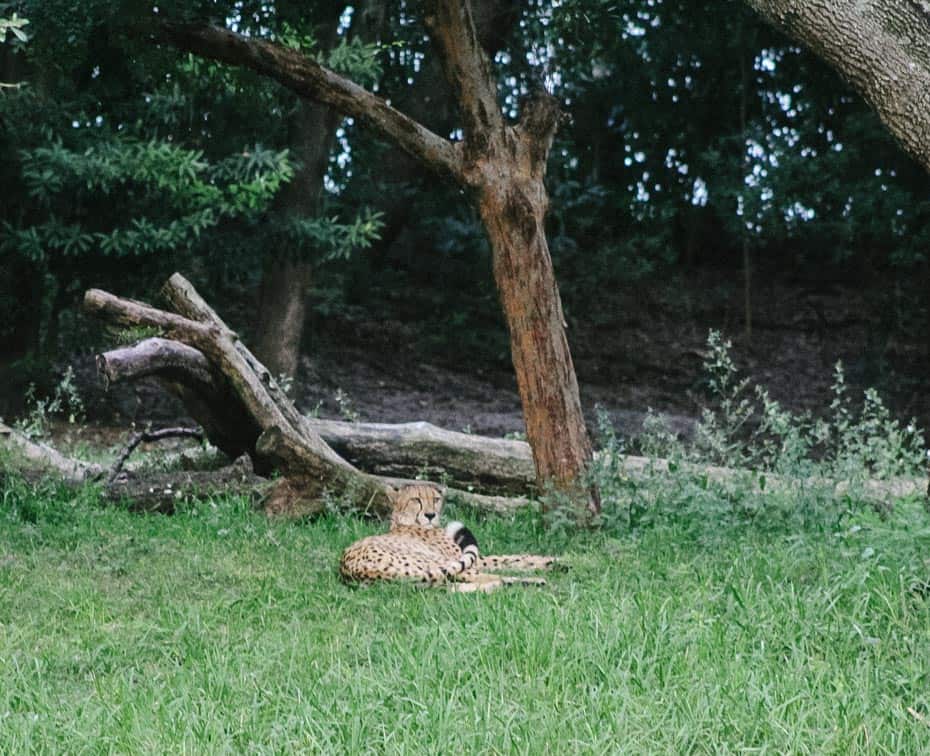
Next, you’ll come across a large, fenced area with trees. This is where the cheetahs are located. In my opinion, they’re the most challenging animal to see on Kilimanjaro Safaris. Usually, cheetahs lie in the shade. So look for a pile of spotted fur. You might see one walking around every now and then. This would be an excellent opportunity to use that zoom lens. So far, this is the best photo I’ve taken of a cheetah.
After the cheetahs, you’ll approach the lions’ den, where you’ll get to see lions. Unfortunately, they’ll probably be sleeping. (It’s what they do.) You may remember that Kilimanjaro Safaris introduced three new lion siblings a few years back. Their names are Mshango, Zahara, and Neema.
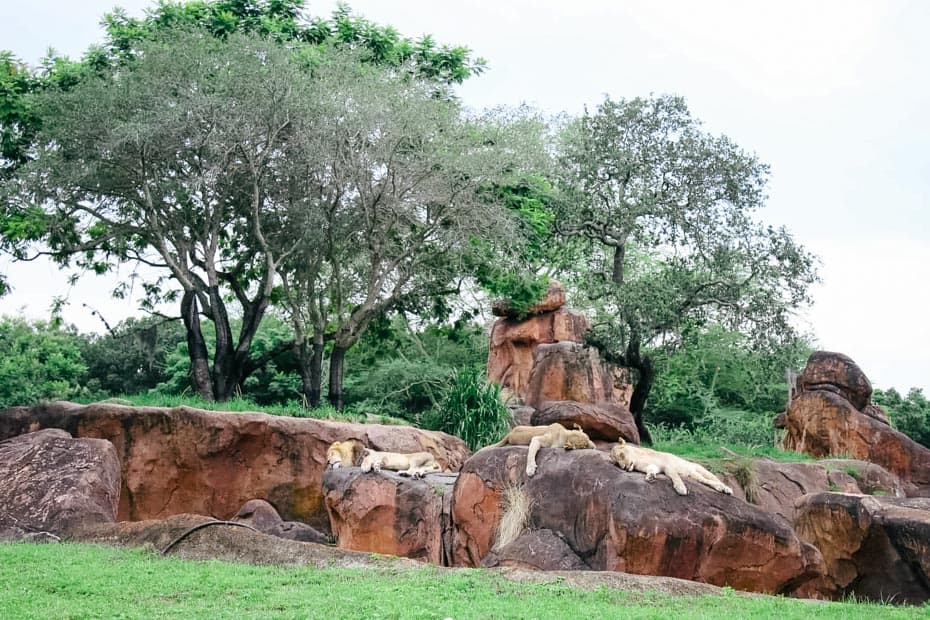
Sometimes you might see a lioness perched high on a rock, overlooking the kingdom.
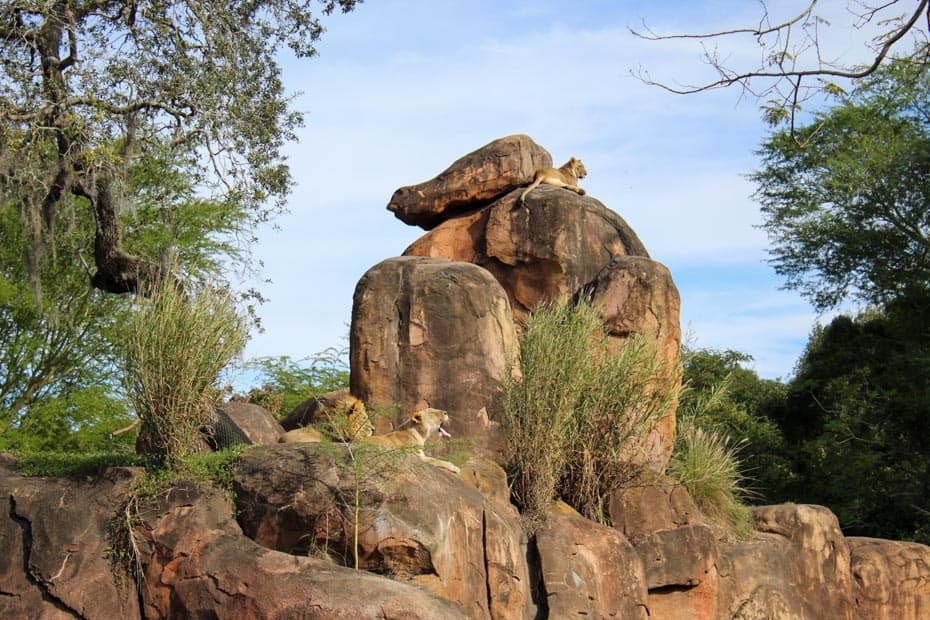
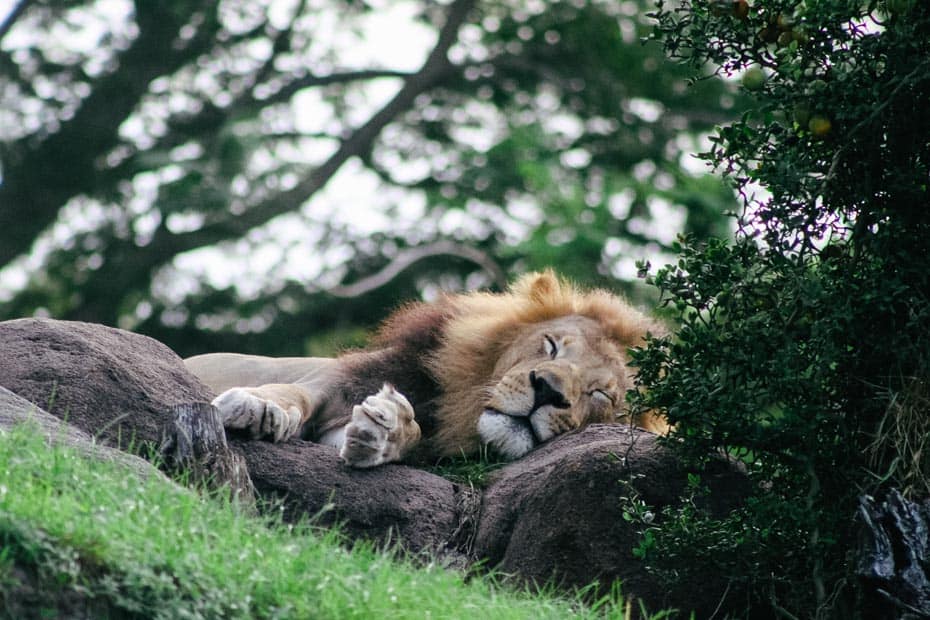
But you will most often see them sleeping. Lions are nocturnal animals, so your best bet for seeing them active is to take a safari later in the day.
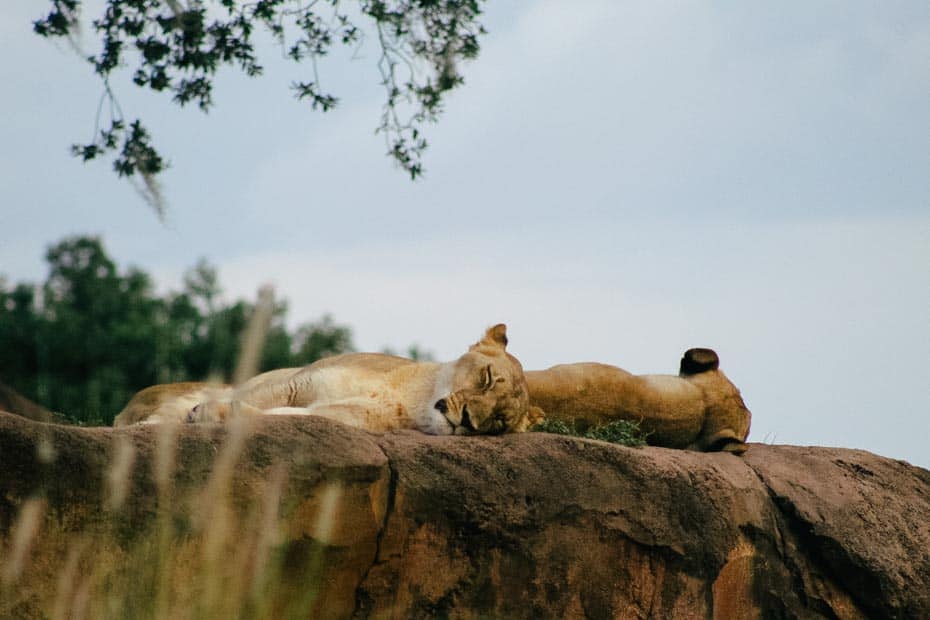
They often start making a unique noise in the evening. So, if you have the opportunity and the safari is open later, I’d ride it once during the day and then again before dark. Here’s the one time I took my zoom lens.
After you pass the lions, there are a few small encounters. You might see a family of warthogs or more grazing animals. Often, you’ll see rhinos and zebras in the area.
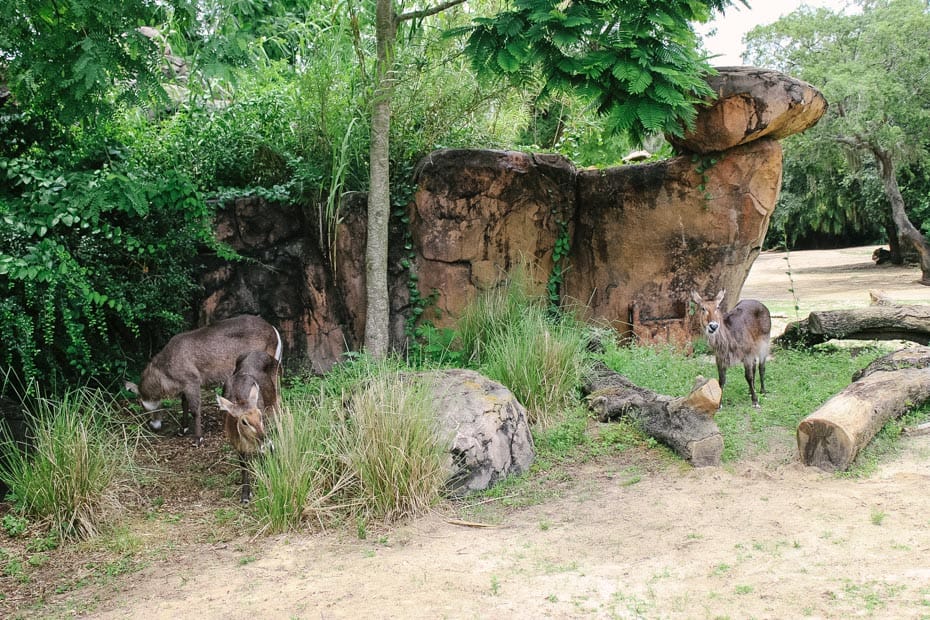
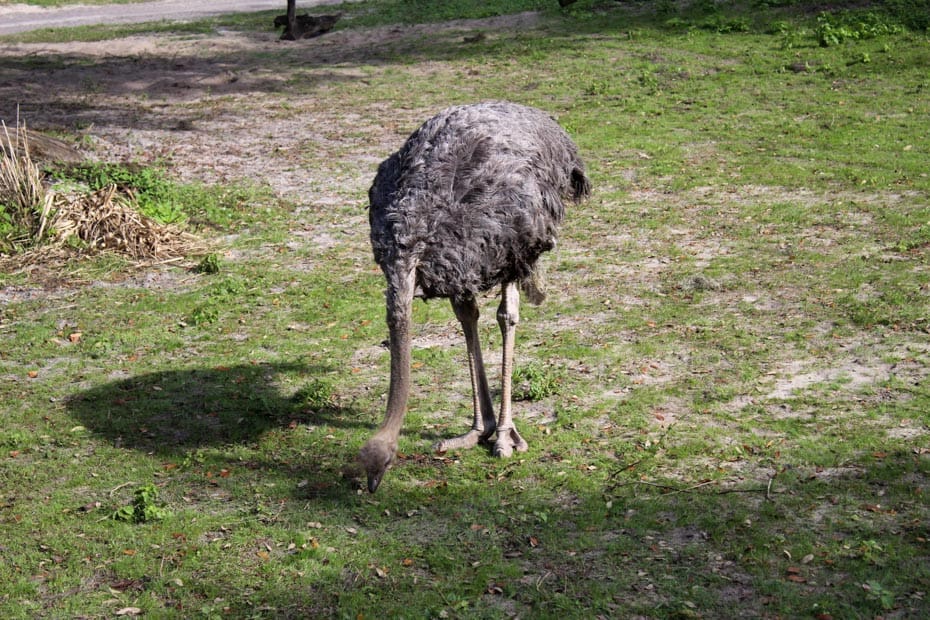
A couple of ostriches are usually out and about.
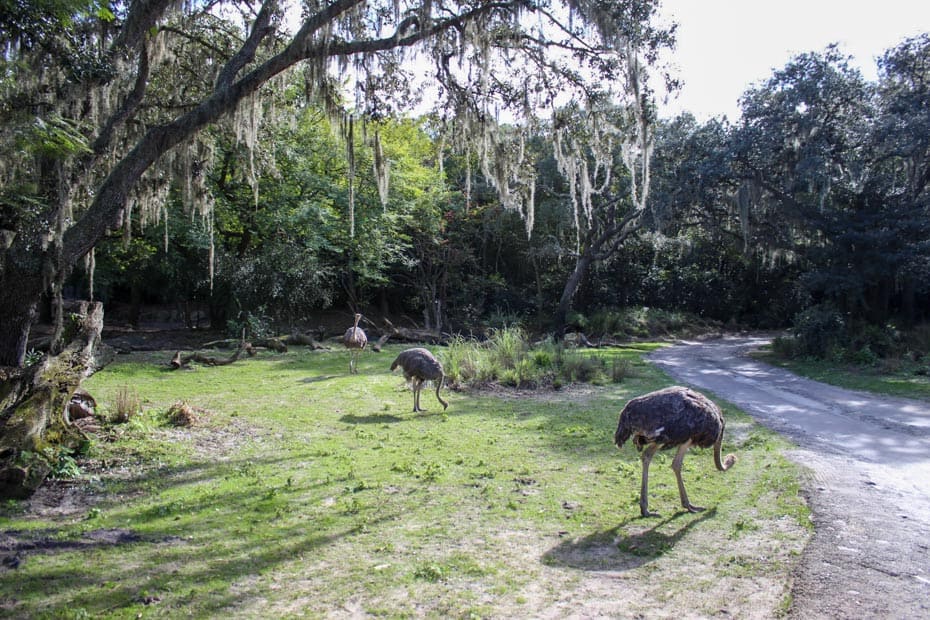
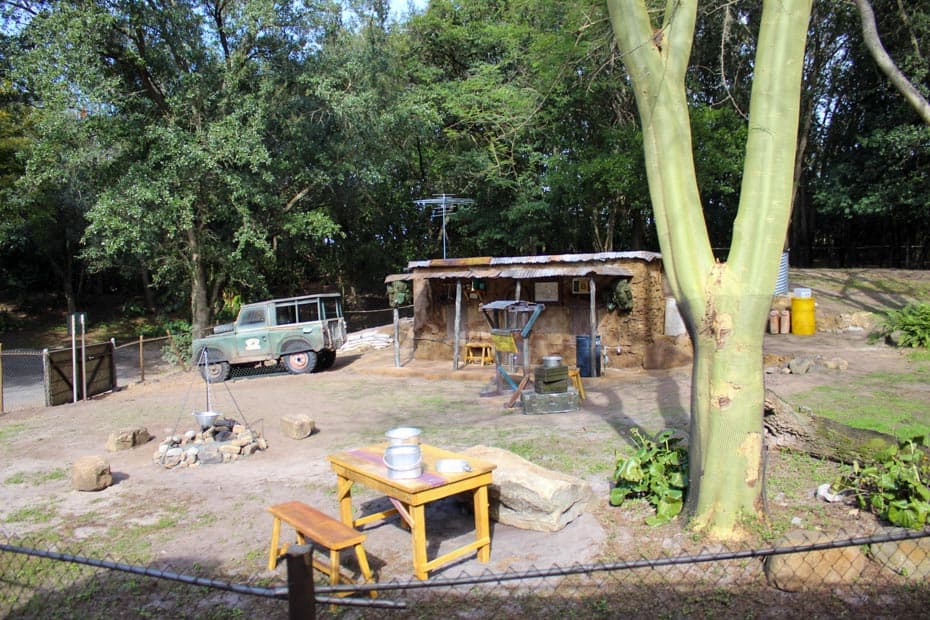
At the very end of Kilimanjaro Safaris, you’ll see an area with Nigerian Dwarf Goats.
Okay, I use the words “usually” and “might” a lot in this article. But the truth is, these particular animals are usually in these areas. However, don’t expect to see every one of them on one go-around. For example, I’ve passed the lion’s den many times without seeing any lions. Most of the photos used in this article were taken over hundreds of rides.
Here are a few commonly asked questions about this attraction.
How long is Kilimanjaro Safaris?
Disney’s website notes that a safari ride is approximately 18 minutes. That timing is a pretty accurate average with a few exceptions. Those exceptions depend on the wildlife activity during your safari. For instance, you will stop and wait if an animal walks out onto the road.
On some safaris, I’ve spent up to 30 minutes waiting because animals block the road. This is their habitat, and we are only visitors, so safari drivers wait for the animals to move out of the way naturally.
What is the best time to ride Kilimanjaro Safaris?
I’m not too fond of this question because the popular answer is early morning or later in the evening when it cools off a bit. So yes, animals might typically be more active at these times.
My answer, though, is anytime! These animals are not getting paid to put on a show. They aren’t slacking off in the heat of the day. Every safari experience is unique. The saying “No two safaris are alike!” is true.
One of my favorite times to ride Kilimanjaro Safaris is during a light rain shower. Temperatures drop, and some animals are a little more active than usual.
Should we ride Kilimanjaro Safaris at night?
Unfortunately, Kilimanjaro Safaris is no longer offered after dark. It was offered for a limited time in the evenings, but Disney no longer offers it due to so many guests’ complaints about the animals’ poor visibility.
Should you use Lightning Lane to ride Kilimanjaro Safaris?
Yes and no! It depends on when you plan to ride the safari and how crowded the park is on your visit day. If you’re there during a high-crowd time, you’ll definitely want to use the Lightning Lane Multi Pass system for Kilimanjaro Safaris.
However, if you don’t purchase the upgrade, I recommend riding the safari as early as possible. Then, line up again later in the day when wait times tend to drop. When it rains, the wait times for Kilimanjaro Safaris drop significantly. However, during inclement weather, the attraction and the queue close.
Additional Animal Experiences at Kilimanjaro Safaris
In addition to Kilimanjaro Safaris, a few other animal experiences relate to the safari. These options all cost extra.
- Caring for Giants offers a closer experience with elephants. You can learn more about Caring for Giants on Disney’s website.
- If you want to go all out and spend a couple of hours on safari, you might elect to book the Wild Africa Trek.
The Resorts Gal Spin on Kilimanjaro Safaris
We give Kilimanjaro Safaris the green light! This is a must-do attraction, and for us, it never gets old. We often visit the park later in the day to ride it! This is the one attraction that we think guests should experience multiple times. It’s educational, inspiring, and entertaining. Where else can you go on safari?
Resorts Gal Traffic Signals
Green Light
We give an attraction the green light if we consider it a must-do, regardless of the posted wait. We also give the green light for attractions we deem suitable to experience anytime. For example, some attractions have high capacities. Therefore, the lines continuously move, and you shouldn’t have a long wait unless the attraction experiences downtime.
Red Light
We recommend checking the posted wait times for red light attractions. Then, make a quick judgment call on whether to wait, skip it, or return later. We also give some attractions the red light that we feel might not be suitable based on our experience.
Final Thoughts
Whatever you decide, we hope you have a wild time at Disney’s Animal Kingdom. Have fun on Kilimanjaro Safaris! For more attractions in this park, see our list of rides at Disney’s Animal Kingdom. Or, for other parks, see our Disney World Rides and Attractions guide. It links to attraction guides for all four theme parks.
Our Disney World Resorts guide covers the hotels and everything they offer. You might also like our Beginner’s Guide to Dining at Disney World, Beginner’s Guide to Transportation at Disney World, and where to meet characters at Disney World. If you’re still in the first stages, our How to Plan a Disney World Vacation guide brings together the resources you need to plan your visit. Or visit ResortsGal.com for our latest articles and updates.
In the Comments
Have you ever ridden Kilimanjaro Safaris? Let us know in the comments below.
How is social distancing being handled on the vehicles?
Hi, One row per group and there are plastic dividers hanging between each open air row.
Excellent article too.✌❤😷
Thank you